As you probably already know, cross-functional collaboration is key when it comes to managing an efficient and profitable organization. In many companies it is a challenge to translate the plans marketing are creating into operational plans. There is a need to bridge the gap between marketing and operations. If that is also true for your organization that could mean that you are missing out on 10-15% of bottom-line potential.

In this blog post we will investigate what it takes to realize the potential by digitizing the process and thereby bridging the gap between marketing and operations.

Bridging the gap is about creating transparency
Marketing and supply chain do not speak the same language. They have different views of the world: marketing with an external customer and competitor focus, supply chain with an internal vendor and network focus. One area of alignment should be service levels, but how do you collaborate to optimize inventory and thus service levels when you don’t speak the same language? Even harder, how do you do this effectively when you’re dealing with planning promotions? It can feel impossible. Many organizations struggle with this challenge, leading to siloed planning approaches and dark data that can cause more harm than good.

Siloed planning leads to lost sales and reputational damage. To combat this you have to bridge the gap between marketing and operations. This will improve your forecast accuracy, and subsequently raise service levels. Clean and structured data is essential. Marketing should be able to plan, design and review their promotions in a transparent way that provides invaluable data to streamline the supply chain.

Why is it necessary?
When the operations team does not know what marketing is planning, they will continue to optimize based on historical demand patterns. That may be fine if nothing changes. However, as soon as you throw promotional activities in the mix you change the demand patterns.

If operations isn’t adequately prepared–and by adequately we mean with enough lead time to react to the change–you can end up with insufficient stock to meet the promotional demand. Poor service levels and upset customers make for a frustrated marketing team.

It isn’t just about marketing communicating with the supply chain team, this challenge is in effect for the opposite direction as well. If marketing isn’t aware of supply constraints, we can end up with the same challenge of unmet service levels and disappointed customers.

This probably isn’t new information for anyone who has worked in marketing or supply chain. Since everyone knows this dynamic is at play, many people overcompensate. Marketing might turn in forecasts that are slightly inflated to their needs so that they can ensure enough stock. Operations might under-promise and over-deliver to avoid the “situation” they faced during the last promotion. The end result, costly excessive stock.

A new way of managing data in the promotion planning process
Far too often, marketing’s forecasts are kept in spreadsheets, disconnected from other data sources. Changes made in the spreadsheet do not quickly or easily translate into the operational plans. Having a single source of structured data with promotions planning is the best way to ensure this alignment.

Why doesn’t marketing directly input the promotions plans into the supply chain planning software? Maybe they could… but that pesky language barrier can cause problems there as well. The data and information that is relevant for marketing and that which is relevant for the supply chain team can be quite different in terms of scope and granularity.

What does it take?
Cross-functional teams can benefit from digitizing the processes between marketing and operations by implementing a platform which synchronizes demand shaping campaigns and promotions with operations. It can provide a common platform giving all planning stakeholders a single view of operational data that is relevant to their individual roles.

It gives marketing professionals a powerful tool to view and scenario-plan campaigns and promotions in synch with supply chain operations. In turn, the forecasted impact of marketing’s campaigns on the baseline forecast are fed back into operations teams, so they can adjust their plans accordingly.

With the right platform you can improve your promotion planning process through better collaboration and help functions stay aligned with a single source of structured data.”

A retail case
A retail company discovered the power of bridging the gap between marketing and operations:

“When we started using the new promotions software, we migrated from planning promotions in spreadsheets to an easy-to-use multi-user platform. All of a sudden, we could easily bridge the gap between the design of the promotions that the marketing team was responsible for with their integration into the supply chain forecast.

Among other things, this has facilitated the collaboration both internally within the marketing department as well as with the rest of the operations teams. Ultimately, we were able to get the right stock at the right place and reap the benefits of better forecast accuracy.”

Is excel your answer if asked how you manage the S&OP process? Then you might want to see this recorded webinar episode of the Tuesday Guest.

The topic for this episode is: What is S&OP and how can it benefit the business?

Speed in decisionmaking is key for you in terms of reaching your sustainable targets. Though, in many companies employees still work in excel sheet’s when it comes to modelling new Supply Chain designs or even measuring the GHG (Green House Gas) emissions throughout the Supply Chain. The challenge is, that making the right decisions is a complex task. For many companies the complexity is growing. If you want to ensure that you make the right decisions at the right time and in the right quality it is essential, that you have the right tools available. In this blogpost we will look at why Supply Chain design technology is key for your Supply Chain sustainability progress. We will also look at why it is a good investment.

Supply Chain Sustainability at a glance
We live in a world where the “new normal” is increased instability, brought about by a multitude of causes. Political uncertainty combined with a leadership vacuum among governments everywhere, technology disrupters, emerging new business models and the shift away from globalization back to economic nationalism. And last, but not least, consumers are demanding that you actively work to build a sustainable business. These factors are contributing to the fragmentation of established Supply Chain networks.

Sustainability has become a critical perspective in managing organizations.The corona virus pandemic has fundamentally shifted the trends in Sustainability and the way companies are doing business and it is a clear signal, that Supply Chains are entering a transformative decade.Even though COVID-19 had a huge impact on Supply Chains and Sustainability practices, only 52% of the companies have a Supply Chain Sustainability goal. There is greater investment in Sustainability and higher sales for products with Sustainability related labels, indicating a shift in customer behavior. Therefore, the pandemic has contributed to the acceleration of Supply Chain Sustainability agendas.

End to end alignment
If we look closer at the Supply Chain, we could say that the end-to-end Supply Chain is a system with three key “subsystems” at play. A customer market, a supplier market, and the organization (ourselves) in the middle. To design more appropriate responses, we need to understand the drivers within each subsystem and how they inter react. With that we mean:

– The behavioral drivers and segments in the customer marketplace
– The behavioral drivers and segments in the supplier marketplace
– Our own in-house network, which is effectively a decoupling zone between Supply and demand

Summarizing we could say that the Supply Chain design should convey the different types of activities needed on the demand side and the capabilities we need to draw upon from the supply side. It proactively enables us to make intentional decisions when designing the network , including how and where to buffer or decouple along the chain/network.

Faster and better decision making
Decision making in operational environments is changing. The quantity and quality of data available to support decision making are growing exponentially. Focus is on exceptions, with more routine tasks automated. But in a more volatile environment, risk is higher and assumptions harder to make. What has not changed, however, is that despite of all the decision support available, the critical strategic decisions will still come down to individuals and leadership teams.

Complexity demands technology for Supply Chain design
That is where Supply Chain technology comes in handy. ERP systems are partially enforcing organizational siloes with limited scenario and analytics capabilities. Also, business intelligence initiatives and data lakes are limiting the insights into the future as it is typically projecting historical or current set ups, lacking alternative solutions never used before. Insight gaps and decision evaluation are based using an excel solution.

As also described earlier, the challenge is, that the pace of internal and external events that impact our supply chains is ever increasing. So is the interdependency of those events and the functions within the supply chain networks. With a complexity well beyond the grasp of excel, there is an immense need to augment and improve to make more  sustainable and intentional decisions. That is why technology is needed.

What is Supply Chain design?
Through scenario analysis, with mathematical models built in none-code environments on top of powerful solvers, Supply Chain Designs offers organizations a flexible approach to:

  • Articulate the complexity and events in the Supply Chain and understand and act upon the principles under which it operates across all its functions (end to end)
  • Articulate the relevant actions and decisions the organization need to take every day to support the realization of its strategy and vision
  • Evaluate the consequences and risk associated with those actions and decisions across the entire supply chain
  • Make decision recommendations given different organizational objectives among the overwhelming amount of solutions that each scenario typically holds

In other words, given strategic objectives on sustainability, operational cost, market growth, or service requirement etc., Supply Chain Design let you resolve infrastructure and policy question such as

  • optimal number, size, and locations of facilities (suppliers, plants, warehouses )
  • the best flow and decupling point set up for products in your network
  • optimal mode of transport (air, ocean, truck, drones etc.) on your lanes
  • best routing for shipment pickup and delivery
  • .. and many more

How can it benefit your business and your Supply Chain?
As a result, you will be able improve your balance between costs (logistics, inventory, labour, utilities, taxes), risks (fire, flood, natural disaster, strike, legal, political) and carbon emissions. As well as your service levels (customer satisfaction) and the flexibility of your business. Supply Chain Design initiatives typically produce significant cost savings and service improvements, especially when integrated into the decision making processes.

You will be able to:

  • Put your supply chain in context with visualizations that highlight trends
  • Quantify your supply chain health to see performance
  • Monitor and track supply chain performance with a living baseline for a view of the ecosystem and its policies
  • Model, track, monitor and share visualizations with stakeholders for more buy-in and bigger thinking
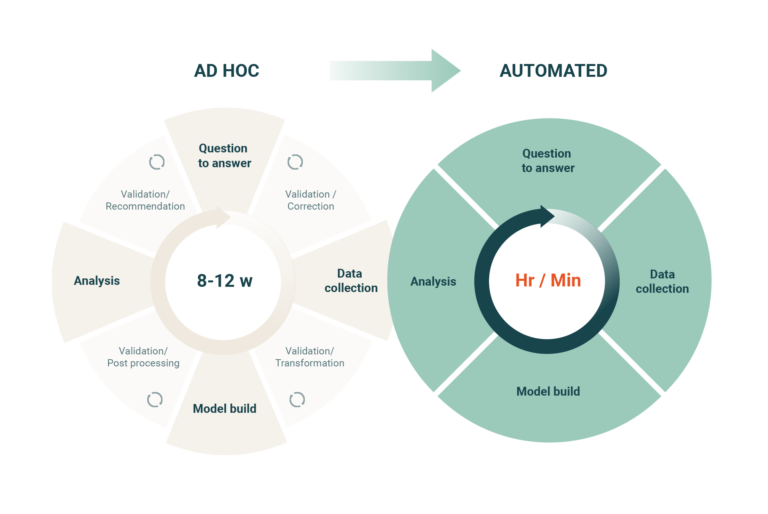
When it comes to speed in decision-making you can use Supply Chain design technology to go from weeks and months to days, hours and for some even minutes in building a model.The below figure illustrates it.


Ever wondered what pilots are doing in the cockpit of the airplane? It is quite like the job of the Chief Supply Chain Officer (CSO) (in Supply Chain Planning) or CFO of a company. Before pilots take off, they have planned their journey ahead and counted in the different variables that could affect the planned journey. They have planned and practiced for different scenarios that could take place and what actions they require. Just before take-off they check the latest information about weather, data around the equipment and ask for clearance. Should they encounter some turbulence in the air, or other challenges, they use their cockpit to steer the plane on a new course, but according to pre-defined policies.

They still have the end destination as their goal. Sometimes they use the control tower to check on the course, but they want to avoid using it. Visibility, decisionmaking and actions based on the latest information from various sources is how they, the pilots, stay in control.

Why should you read this whitepaper about Supply Chain Planning now?

In the fresh light of the Covid-19 disruption, many business leaders are looking for ways to mitigate risks and control of cash flow by bridging strategy and operations and creating a foundation for resolving demand and supply imbalances. In terms of competitiveness we typically see that bridging this gap and start working with planning of the Supply Chain from an end to end perspective could mean: 20-50% Inventory reduction, 75-90% Reduced workload, and 98-99,8% Stable Customer Service Level over time.

With this whitepaper you will:

• Get an introduction to why bridging the gap between operations and business plans is key to ensure top and bottom-line growth in volatile environments

• Understand why it is important to have focus on it now

• Learn how you can benefit from working Supply Chain Planning from an end to end perspective

• Get an understanding of how you can work together with a professional partner to create the foundation for an effective integration with your people, processes and technologies


Webinar: How can you plan your promotions instantly and connect marketing and operations in a digital way? This webinar episode is centered around Promotion planning.

Planning promotions effectively is extremely difficult.

  • There is often a disconnect between marketing and operations.
  • The siloed planning approaches can lead to excessive stock or unmet service levels and disappointed customers.
  • Demand signals, lead times and other factors can vary significantly at the channel or store level, making promotions planning extremely complex.

In this webinar session we invite you for some inspiration on:

  • What promotion planning is
  • What challenges it helps solve
  • What the difference is between traditional planning and promotional planning
  • How promotional planning fits into end-to-end planning
  • And if you are ready for a surprise – then we will also share with you a conceptual approach on Promotion Planning from our Advanced AI Lab!


Having an end-to-end Supply Chain planning approach can turn out to be a competitive advantage in the market. Though, in order to leverage your Supply Chain for a competitive advantage it is important, to utilize technology so that it adds business value. In this blogpost we will share with you how it can benefit the business strategy.

The Supply Chain is transforming
The Supply Chain as we know it today is under pressure. Global Supply Chains are operating in volatile environments. The impact of political instability around the world is impeding the efforts of global companies to efficiently drive cross border trade.

At the same we will see the disruption of global sourcing strategies designed to make in-bound Supply Chains leaner through accessibility to a greater diversity of sources. Indeed, political risk is the “next normal”, as regulatory changes challenge global Supply Chains. Adding to that we have the “Uberization” and the climate change which challenges the designs of the Supply Chain.

In other words, because the likelihood is that centre-of-gravity of a Supply Chain is going to change frequently in the future, given the volatility of the business environment, the need for flexibility in the supply/demand network increases.

Supply Chain designs to date have predominantly followed an ‘inside-out’ approach, where personnel inside the business take a view of what they think customers’ needs are, and proceed to build the corresponding infrastructure, processes and technology. When times are stable, and growth is positive, everything you do in this respect seems to work. But as we move into more volatile operating environments, and customers become more vocal and empowered, it becomes obvious that a single ‘ideal’ supply chain configuration will be unable to service the full spread of customer expectations.

Many organizations want to digitalize their supply chain planning, but few supply chain planning leaders know what this really means. If you want to know more about what Supply Chain planning is all about then you can read this blogpost (https://optilon.com/optilon-academy/what-is-supply-chain-planning/)

How can the business benefit from an end-to-end approach?

It can help leverage the volume of data
Anyone working within the supply chain and planning process is familiar with the endless array of data coming from the increasing number of systems in play. The question lies in how organizations can leverage the volume of data to achieve faster transfer of information for powerful insights and holistic visibility of their Supply Chain across multiple functions. To evaluate and improve the efficiency of their Supply Chain, organizations need solutions that makes sense of the data and that connects the organization for effective informed decision making.

It can reduce resource consumption
Automating non-value adding manual tasks with Supply Chain planning technology is more efficient, accurate and cost effective than manual labor. It helps improve operational efficiency. It typically reduces workload by 50-90% and frees up time for planners to improve the business through more analytical and proactive tasks. This could be analytical work, communication, mitigating risks or comparing plans.

It can reduce complexity
By utilizing Supply Chain planning technologies it is easier to understand and visualize the complex and uncertain world. It is easier to simulate and get a feeling of the outcome of the decisions and to use one set of data. It is also a way of capitalizing on the data that the company possesses.

It can enable visualization
Digital technologies also provides an opportunity for using a digital twin to simulate or model your existing Supply Chain and visualize the “to be” as well as analyze the “cost to serve” and if you like, highlight the trade-off’s between the Sustainable impact and the cost.

It can provide faster business growth
Systemizing your inventory management from an” inside out” perspective to an “outside in” by focusing on customer service instead of traditional approaches decrease key issues like stockouts and overstocks. It helps you with more accurate inventory. Streamlined workflows and processes can be scaled up easily, leading to faster business growth.

Simultaneously you can expect a reduction in lost sales and markdowns due to increase in on-shelf availability. Reduced time between ordering and fulfillment has a positive impact on customer satisfaction. Increased customer service and the right product mix drives sales revenue.

It can reduce costs
Automating your processes and freeing up time means reducing expediting and operating costs. With data driven inventory decisions you can replace excess inventory with data to drive better performance. You can reduce your inventory with 20-30%. Simply because you can put the right products in the right place at the right time for more efficient order fulfillment. You are also able to develop a smarter assortment and stock mix.

It can improve agility, better decision making & collaboration
With the right platform you can easily respond to market changes. Reporting and forecasting tools can be used to make smarter, data informed decisions. Having a centralized source of truth for data enables transparency across teams and customers, while it raises motivation to go that extra mile.

We could say that the processes, behind the technology, should bridge the organizational silos and make up the decision center for a forum that unites decision makers to solve business criticalities.

It can help close the gap between Finance and operations
Companies, which are taking this even further also want to close the gap between Finance and Operations and make the Supply Chain data an integral part of the company’s planning and forecasting processes. They want to make their financial controlling processes an unlimited interaction with stakeholders across the business.

Would you like to know more about end-to-end Supply Chain planning then we suggest that you download our whitepaper right here.

Contact us to book a meeting

By clicking “Submit”, I agree to Optilons privacy policy.