


Customer behavior rarely changes abruptly. Order patterns shift gradually. Volumes drift. Engagement weakens.
These signals often appear long before any formal change in contracts. If they go unnoticed, planning continues based on assumptions that are no longer valid.
When Contracts and Reality Diverge
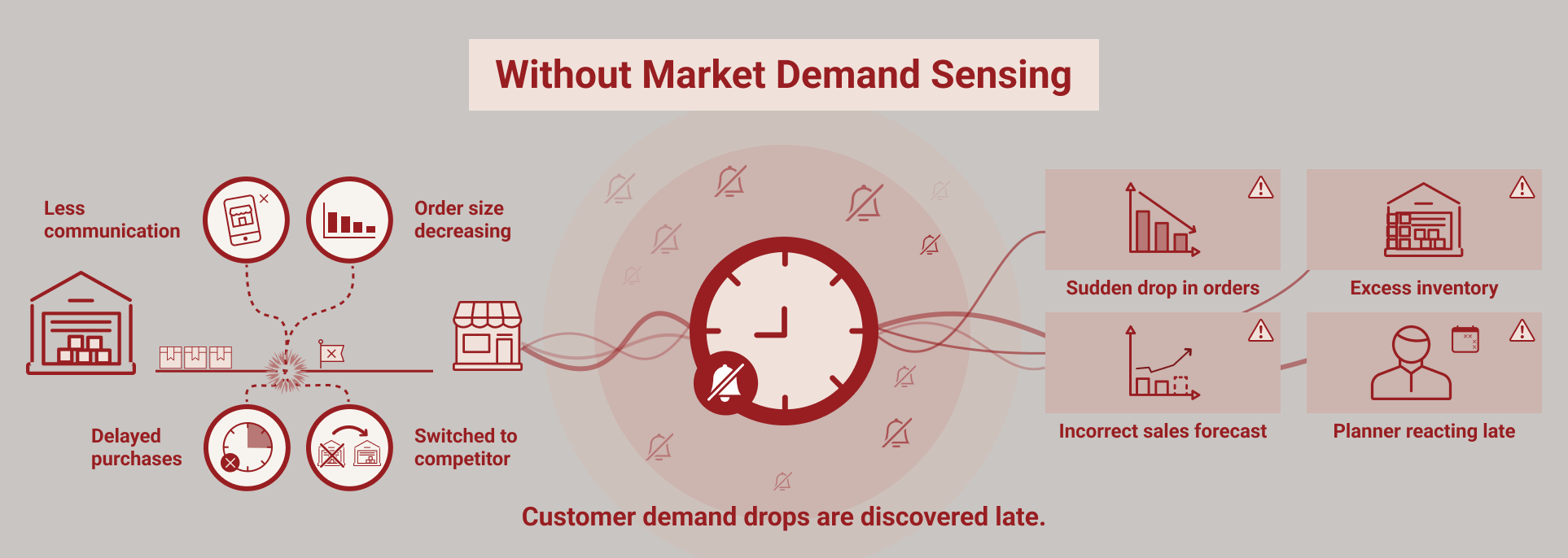
Contracts define expected demand, but actual behavior often tells a different story. Order frequency declines. Volume commitments are not fully met.
Communication slows.
Without early visibility, this gap grows, leading to excess inventory, misaligned production, and inaccurate forecasts.
A Predictive View of Customer Behavior
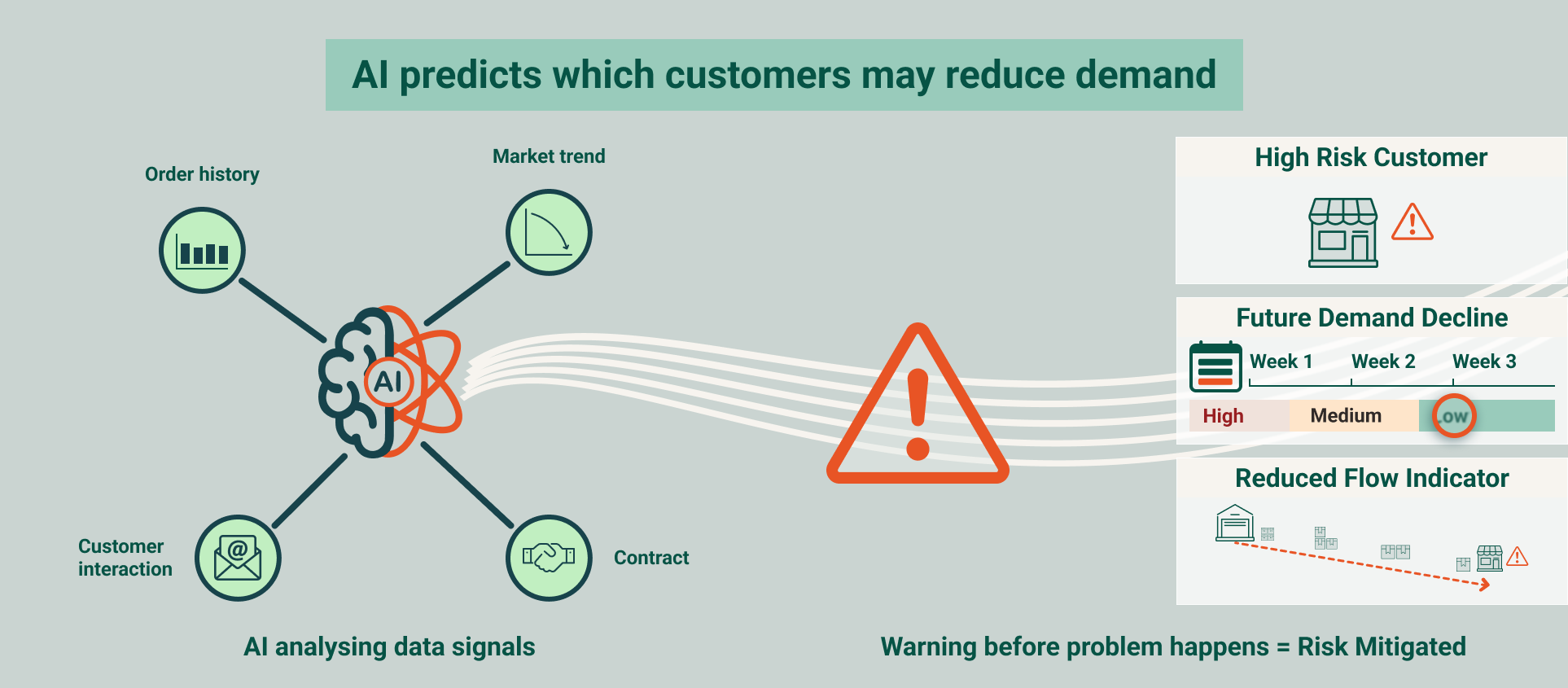
Predictive demand sensing analyzes how customers behave over time, identifying patterns that signal strengthening, stable, or declining demand.
It combines transactional and behavioral signals to estimate what is likely to happen next.
Key indicators include:
- Changes in order frequency
- Gaps between committed and actual volumes
- Slower response or engagement patterns
- External signals influencing purchasing behavior
This provides a forward-looking perspective on demand stability.
Turning Insight into Better Decisions
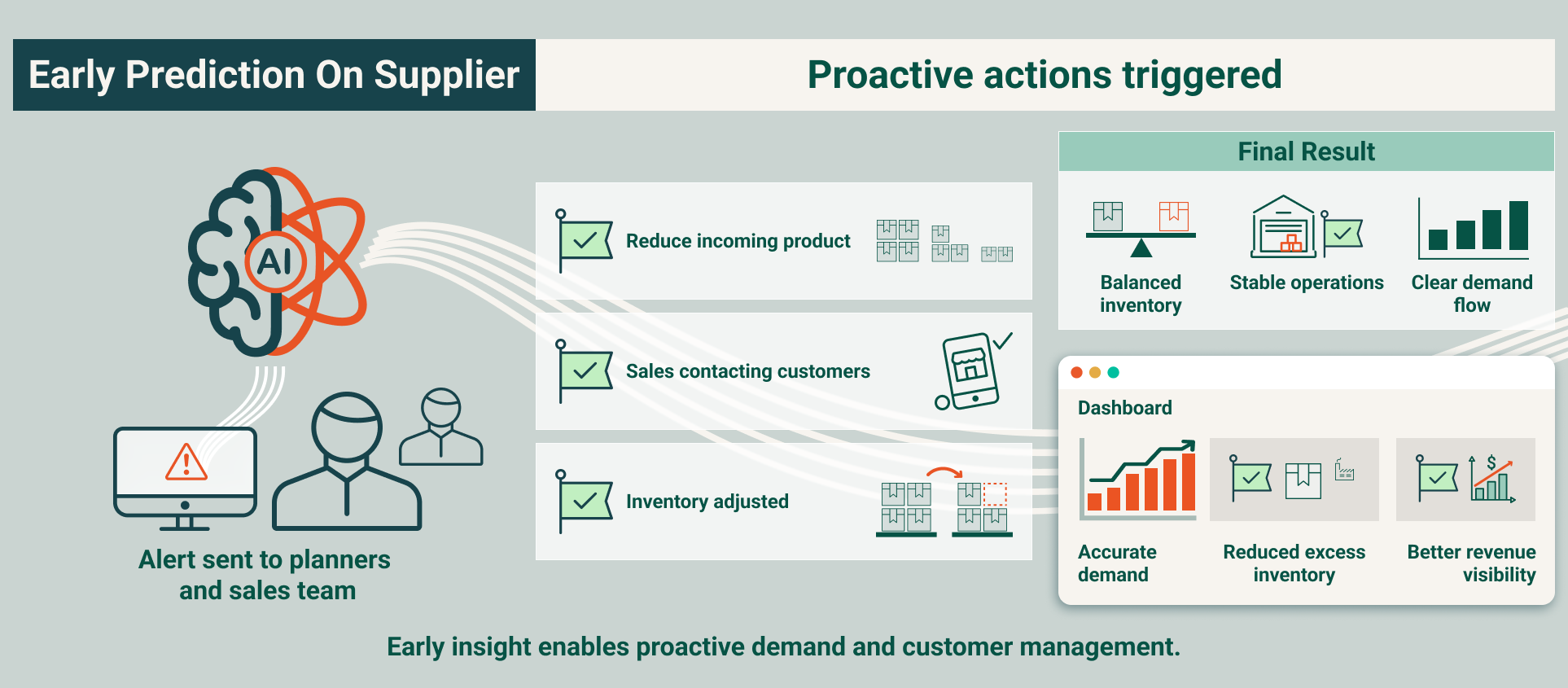
With clearer visibility, planning becomes more realistic. Forecasts reflect likely demand instead of historical assumptions, and production capacity can be aligned with more stable demand streams. Commercial teams gain time to engage at-risk customers before declines accelerate.
Aligning the Entire Value Chain
When demand signals are shared across functions, decisions become more coordinated. Procurement avoids overcommitting, inventory aligns with actual needs, and customer communication becomes more accurate. This reduces operational noise and improves overall stability.
Measurable Impact
- More reliable demand planning
- Earlier identification of at-risk customers
- Better alignment between inventory and actual demand
- Improved capacity and resource utilization
A Capability That Sharpens Over Time
As more behavioral data is captured, the system continuously improves its ability to detect subtle demand shifts.
Over time, it becomes a critical input for both planning accuracy and customer relationship management.
Want to learn more?
With 20 + years of experience and more than 1,000 successful projects, Optilon helps companies design supply chains that work and keep improving.
Book a meeting with a supply chain expert to explore how predictive demand sensing can improve forecast accuracy, reduce demand uncertainty, and strengthen customer insights.