


Supply chains depend on thousands of supplier relationships, yet not all suppliers play the same role. Some are critical for performance and continuity. Others contribute marginal value but consume disproportionate effort. When these differences are not visible, procurement and planning teams struggle to focus attention where it matters most.
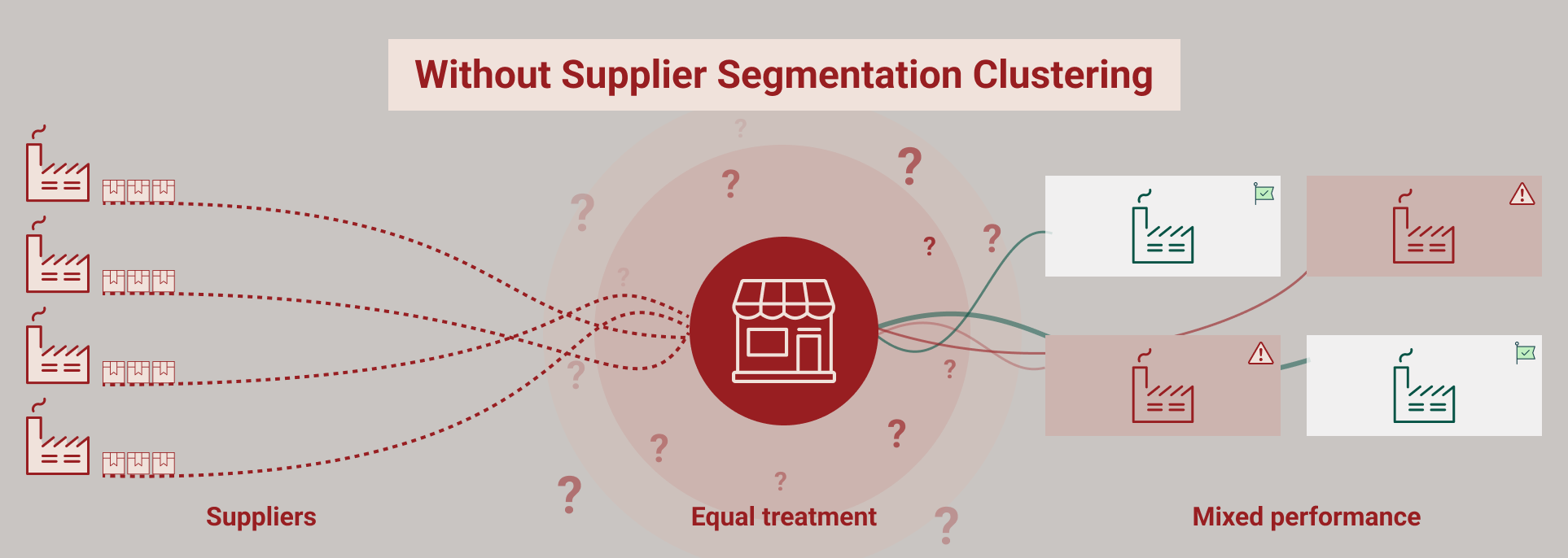
Many organizations still rely on static classifications or manual assessments to manage their supplier base. Over time, these approaches fall out of sync with how suppliers actually perform.
Why one‑size‑fits‑all procurement creates blind spots
Supplier behavior changes constantly. Delivery precision shifts. Capacity tightens. Quality drifts. External risk increases. Manual segmentation struggles to keep up with this evolution, especially as supplier networks grow larger and more complex.
When segmentation is outdated:
- Critical suppliers may not receive enough attention
- Emerging risks remain hidden until disruptions occur
- Time is spent managing suppliers that have little impact on performance
Instead of enabling better decisions, supplier data becomes fragmented and underused.
From static classifications to data‑driven clusters
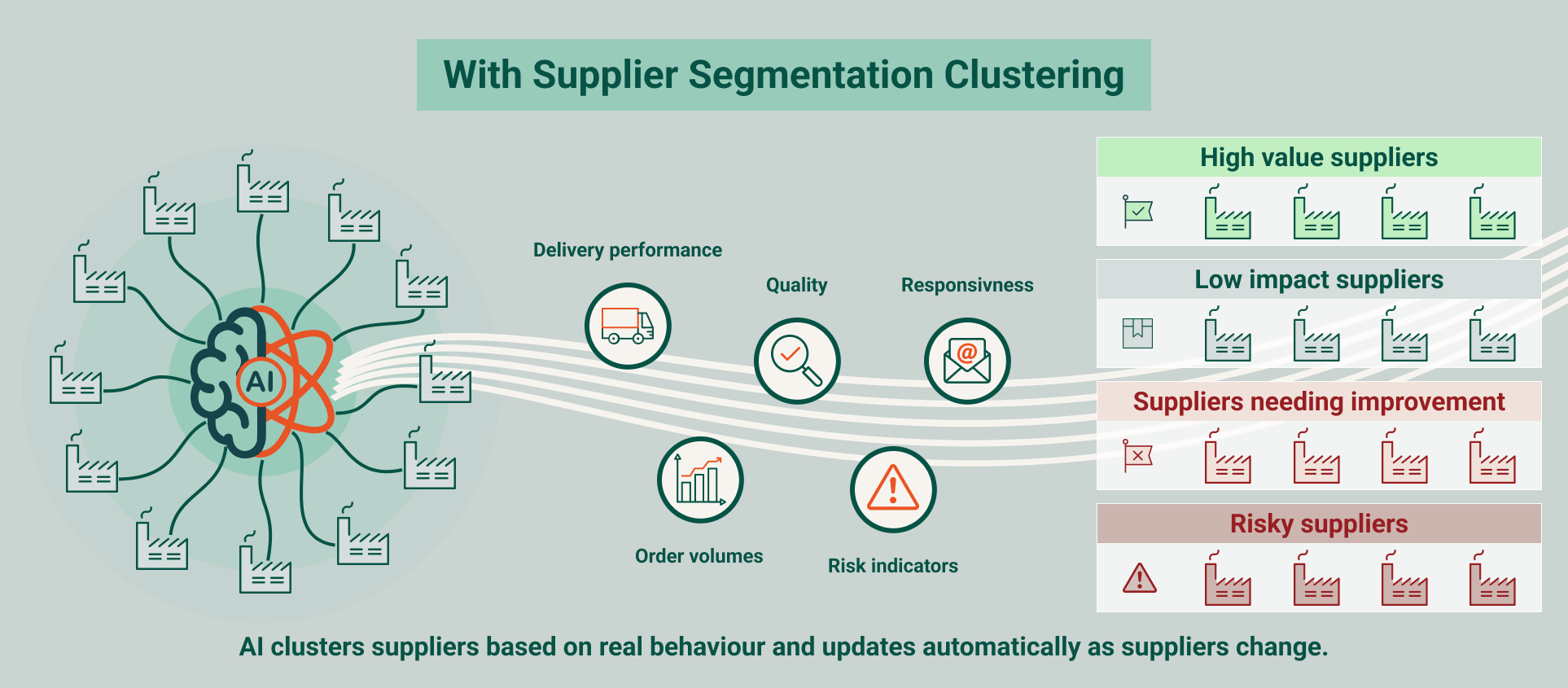
AI‑driven supplier segmentation uses machine learning to identify natural groupings within the supplier base.
Instead of applying predefined rules, the system analyzes real performance patterns and risk signals to determine how suppliers behave over time. This creates an objective, continuously updated view of supplier diversity, one that reflects reality rather than assumptions.
How AI clustering supports daily decisions
- Groups suppliers based on delivery reliability, variability, quality behavior, responsiveness, and business importance
- Highlights segments where performance or risk is deteriorating before disruptions occur
- Supports differentiated strategies for collaboration, improvement, consolidation, or risk mitigation
Procurement and planning teams gain a shared, consistent understanding of which suppliers matter most and why.
Embedding segmentation into planning and sourcing workflows
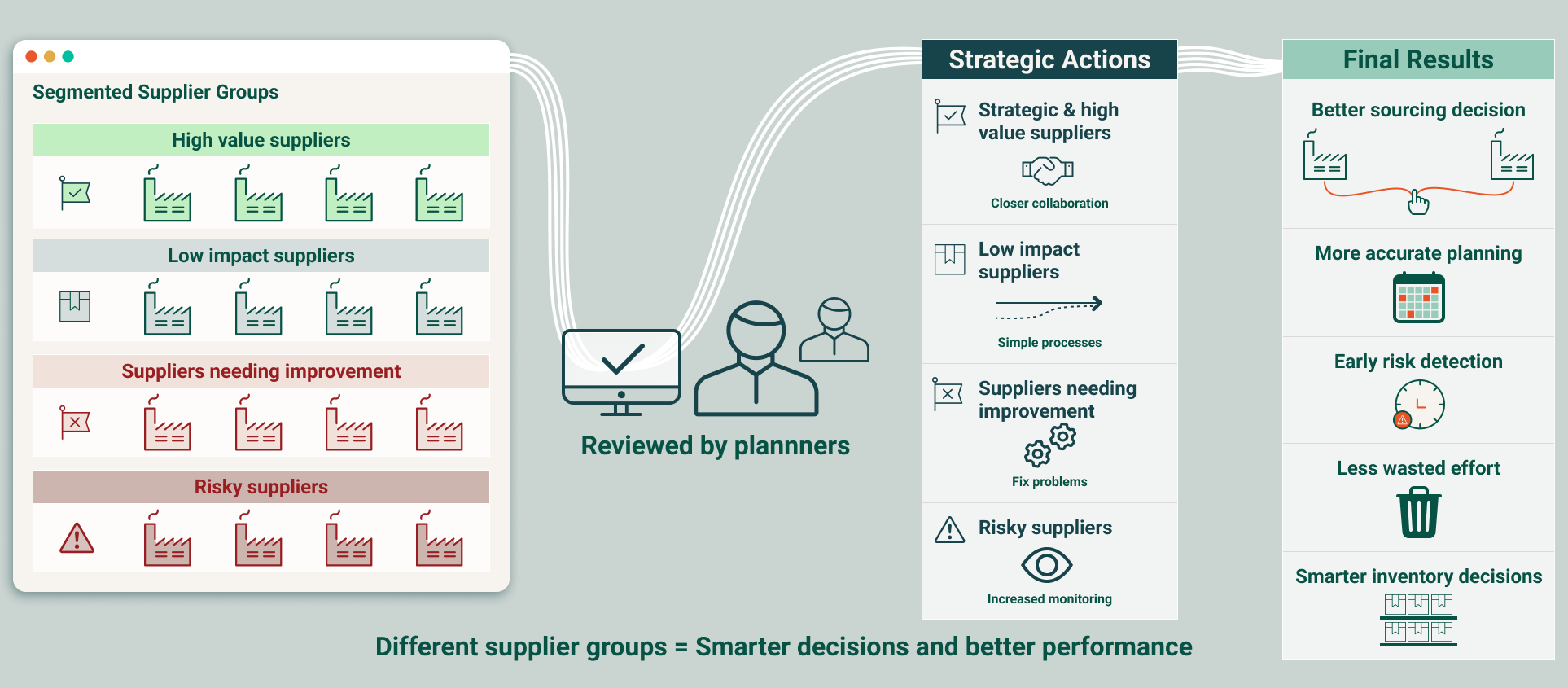
Supplier segments update automatically as new performance data becomes available.
Planners can align safety stock and sourcing assumptions with the characteristics of each segment instead of applying uniform policies. Procurement teams can prioritize collaboration efforts and supplier development initiatives more effectively.
Rather than reacting to isolated issues, organizations manage supplier performance at a structural level.
Measurable impact
- More focused procurement strategies aligned to supplier behavior
- Improved planning accuracy through supplier‑specific assumptions
- Earlier visibility into supplier risk trends
- More effective use of time and resources
Want to learn more?
With 20 + years of experience and more than 1,000 successful projects, Optilon helps companies design supply chains that work and keep improving.
Book a meeting with a supply chain expert to explore how predictive demand sensing can improve forecast accuracy, reduce demand uncertainty, and strengthen customer insights.