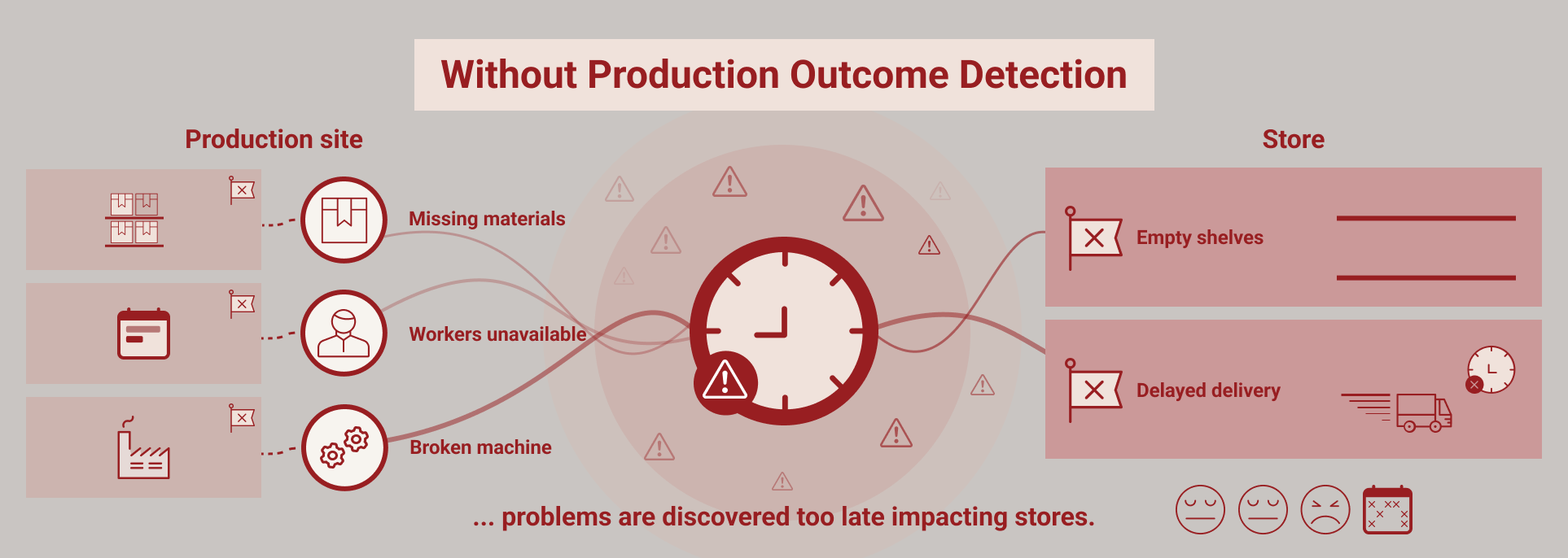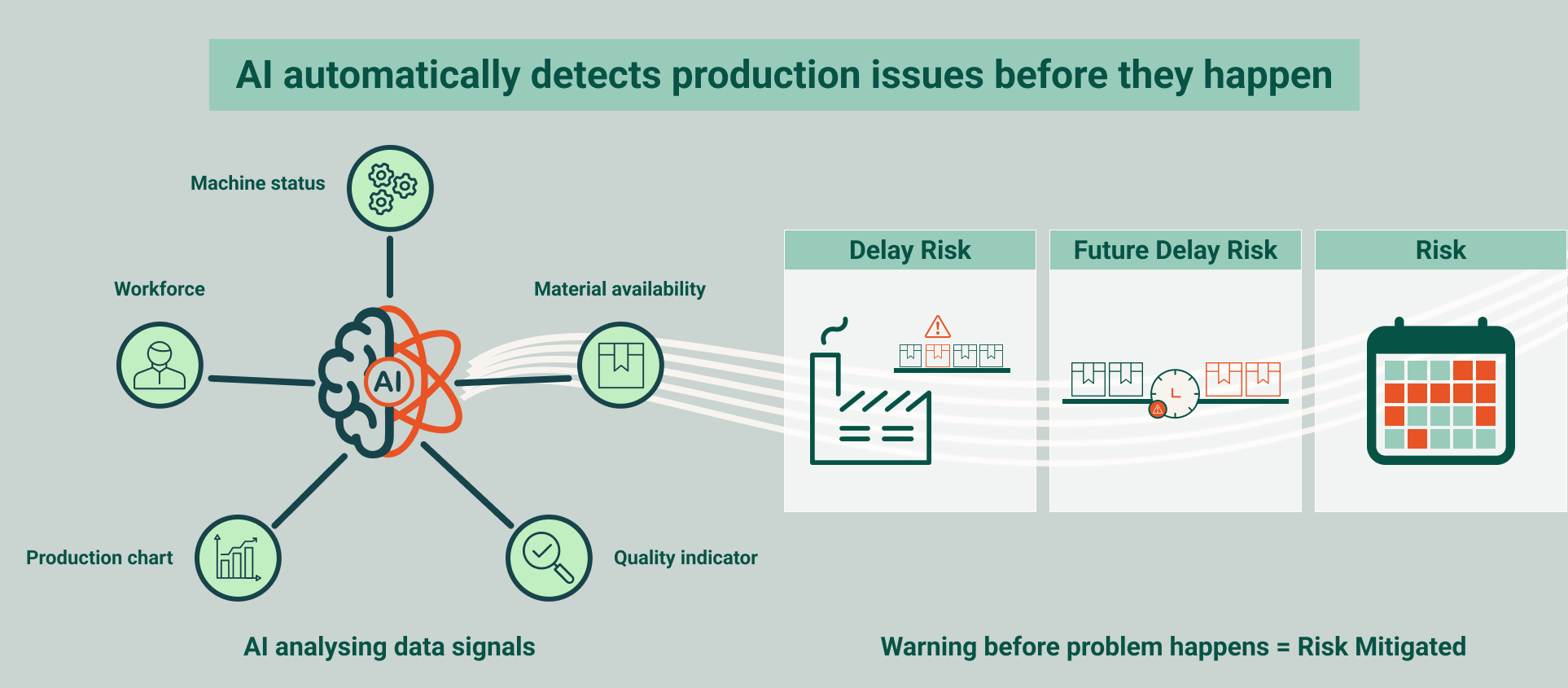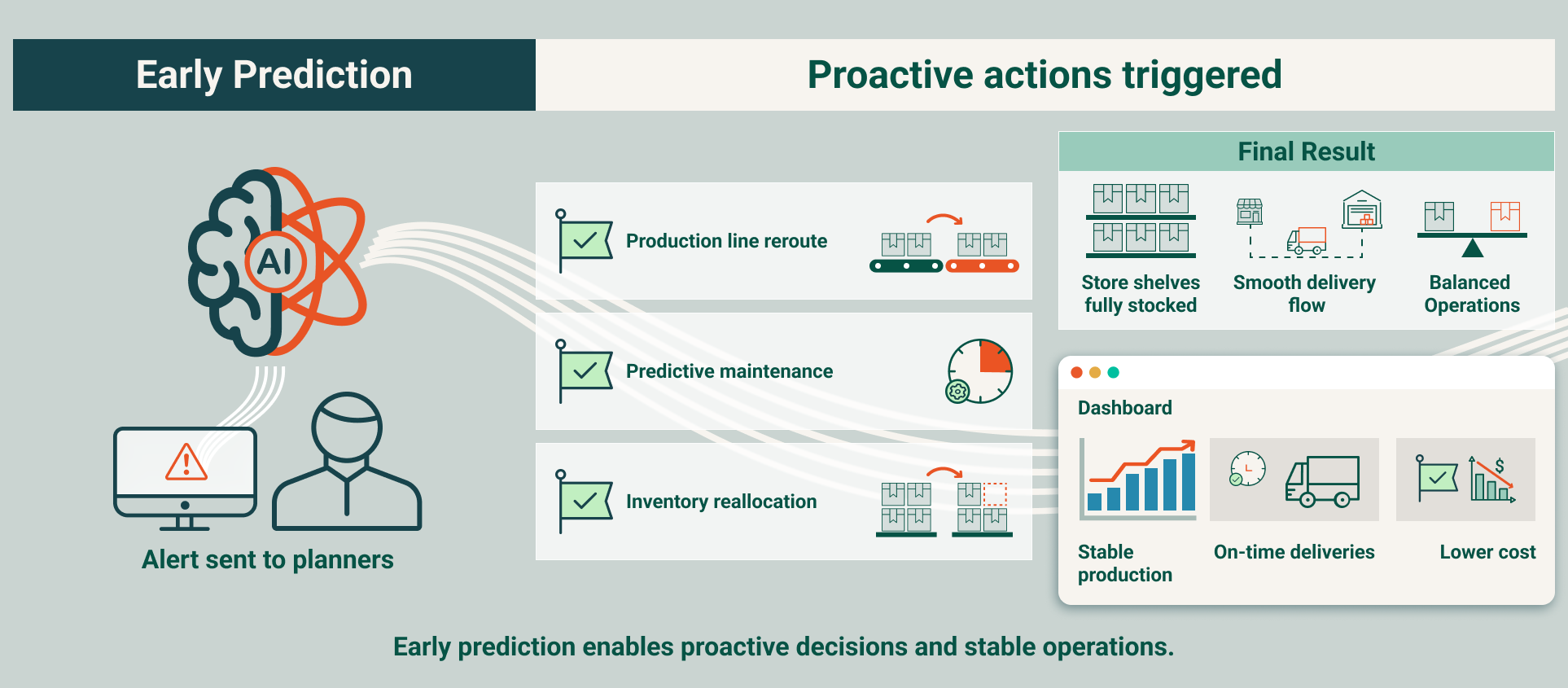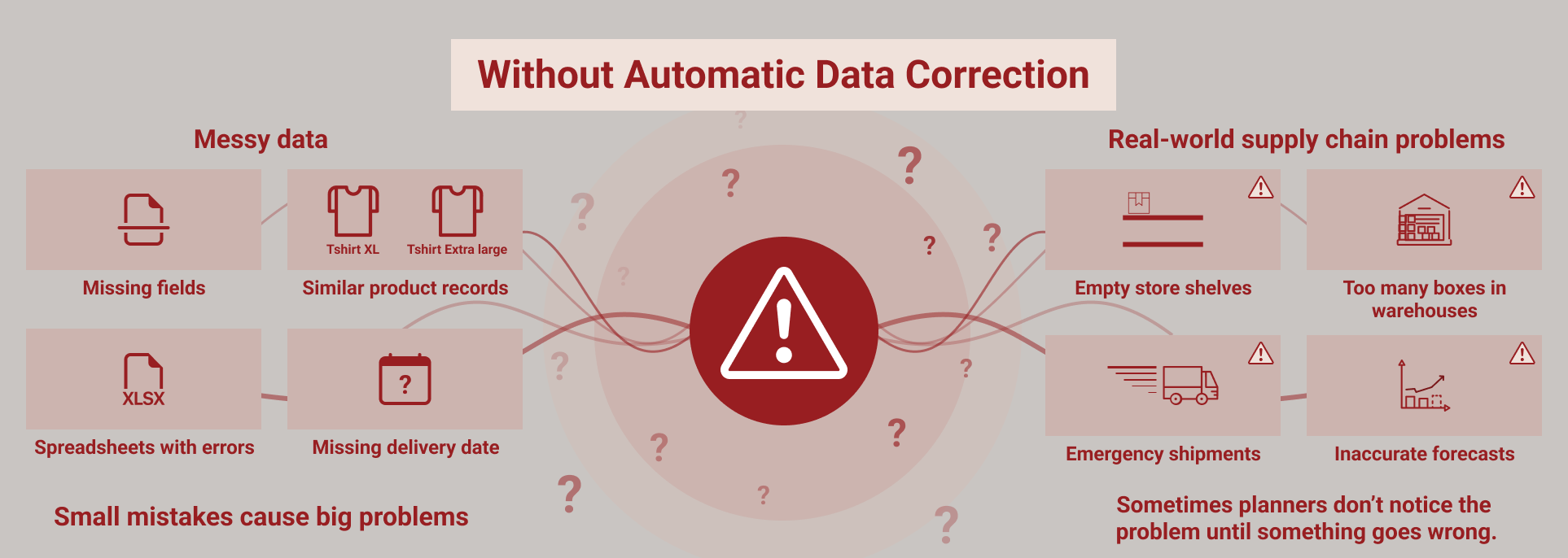
Lead times change constantly. Suppliers shift. Transport conditions fluctuate. Production schedules move. Yet many organizations still rely on averages or outdated assumptions. 

Over time, those drift away from reality, introducing uncertainty into planning, inventory, and service. The solution starts by recognizing where traditional approaches fall short and replacing them with a data-driven method that reflects how your supply chain actually behaves. 

Why traditional lead time assumptions fall short 

Even when lead times exist in the system, they rarely reflect how the supply chain actually performs. Variability increases quietly, and teams compensate manually. 

Buffers grow. Procurement reacts too late. Logistics loses visibility. Costs rise while service levels become harder to protect. This is the gap a more dynamic, machine learning approach is designed to close. 

How machine learning improves accuracy 

Machine learning continuously evaluates how lead times behave in practice. It connects patterns across shipments, suppliers, and transport flows to estimate when orders are actually likely to arrive. 

Key data inputs include: 

  • Historical shipments 
  • Supplier reliability patterns 
  • Seasonal effects 
  • Transport performance 
  • Event-based disruption 

As new data flows in, predictions update automatically, creating a live view of lead time behavior instead of a fixed assumption. 

Better decisions across the supply chain 

With more accurate timing, planning becomes more precise. Safety stock is set with confidence instead of caution, procurement can act earlier, and logistics teams gain time to adjust before delays escalate. These decisions reinforce one another, shifting operations from reactive firefighting to proactive control.  

Measurable Impact: 

  • 5–15% lower inventory 
  • 10–30% fewer stockouts 
  • 20–40% less expedited freight 
  • 2–5 percentage points higher service levels 

In some cases, organizations have doubled lead time accuracy using predictive modeling. 

Predictive lead times integrate into existing processes without disruption. They continuously improve as new data flows in, turning variability into predictability.

experts and tribal knowledge 

Want to learn more?

With 20 + years of experience and more than 1,000 successful projects, Optilon helps companies design supply chains that work – and keep improving.

Book a meeting with a supply chain expert to explore how Optilon’s AI-powered demand sensing solutions can help you respond faster to market signals, improve forecast accuracy, and keep inventory aligned with real demand. 

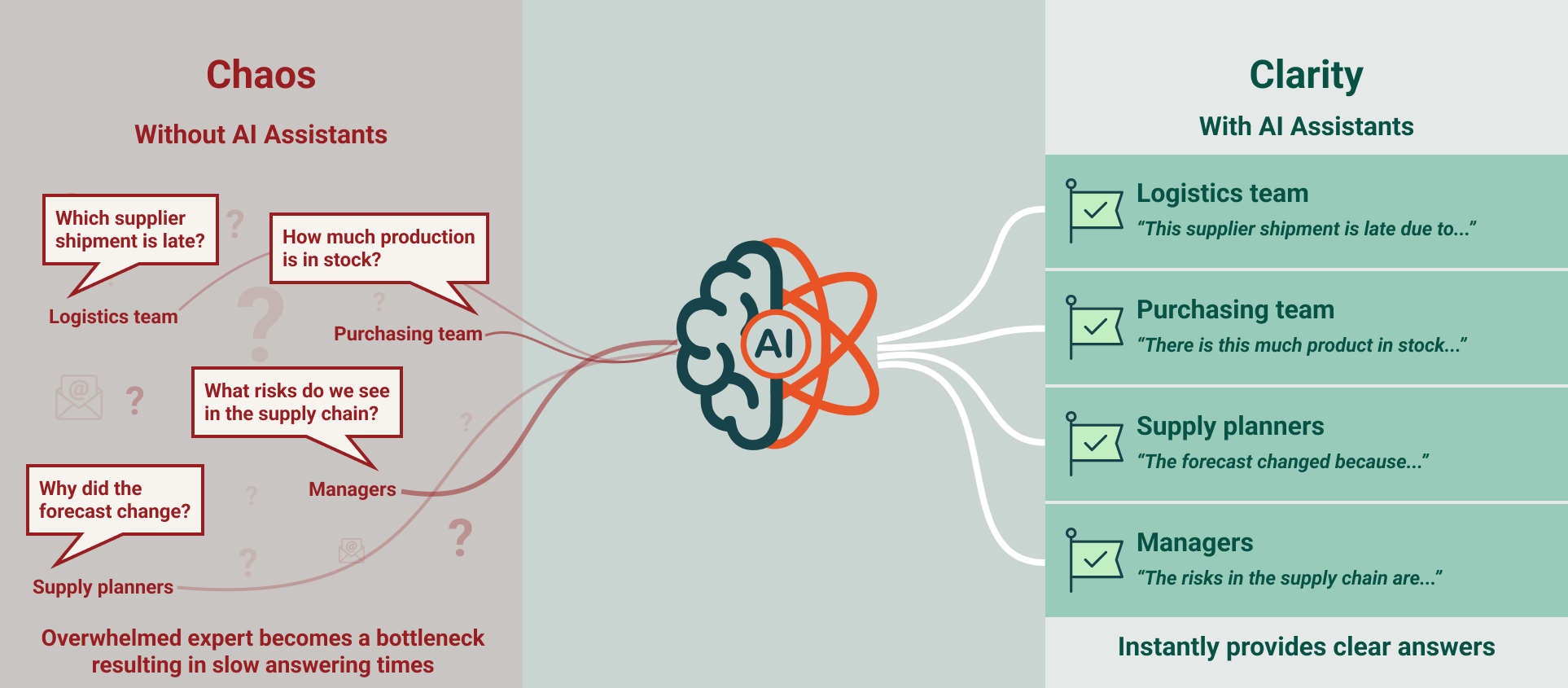
Planning teams face a constant stream of questions. Operational processes, system data, planning policies, and analytics all generate continuous demand for answers. 

The information exists, but it is scattered across inboxes, systems, and individual experts. As expectations for speed and accuracy increase, traditional support models cannot keep up. 

Decision making slows down, manual work increases, and planners rely on information that may be incomplete or outdated. 

From manual support to instant, governed answers 

AI assistants change how knowledge is accessed. Instead of routing questions through emails or relying on specific individuals, users interact directly with an intelligent assistant. Questions are understood in natural language, relevant information is retrieved across systems, and responses are delivered instantly. 

This creates a consistent and governed way of accessing knowledge, reducing dependency on individuals while improving speed and accuracy. 

How AI assistants deliver reliable answers 

AI assistants combine language models, retrieval technologies, and workflow automation to create a unified interaction layer across systems. 

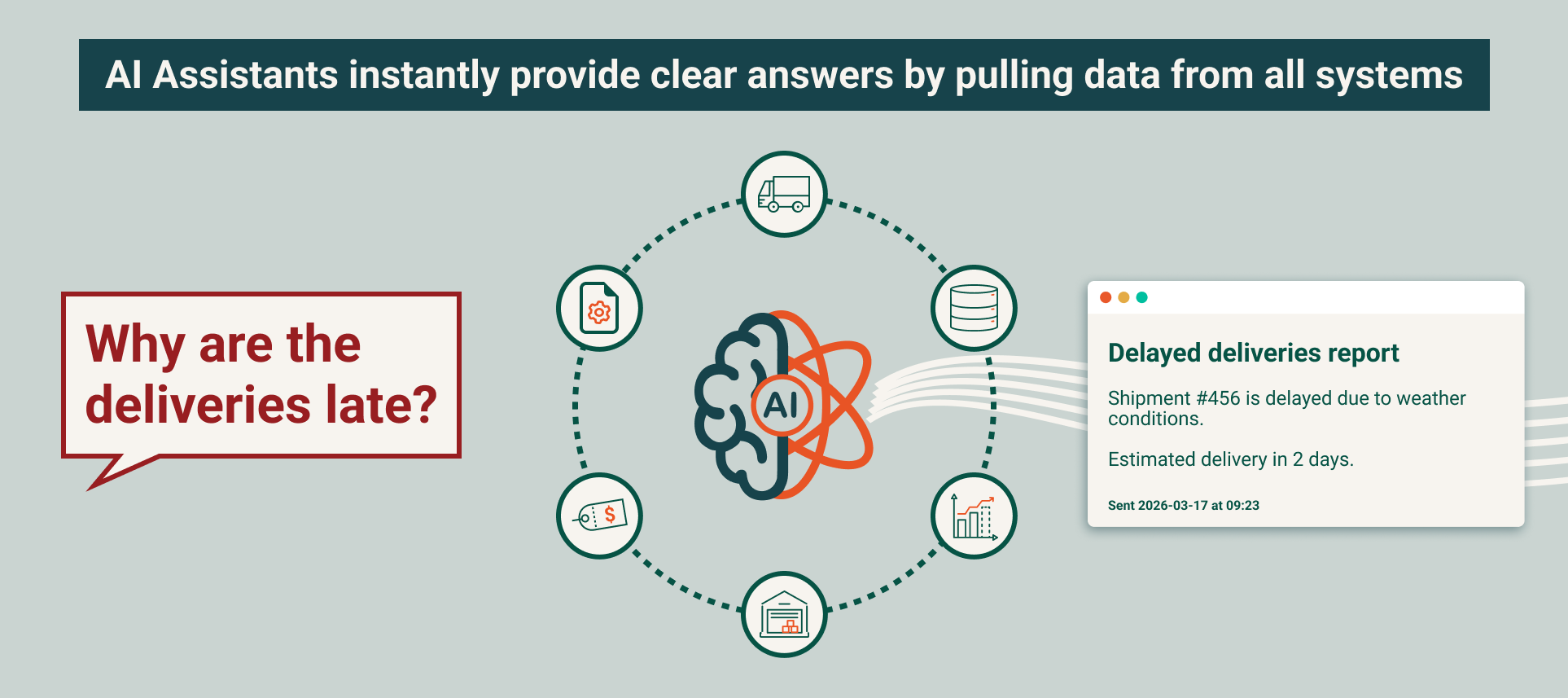
They interpret user intent and connect it to the right data, whether the question relates to planning policies, product data, logistics status, pricing rules, or process guidelines. Responses are grounded in governed knowledge sources, ensuring consistency across teams. 

Context is maintained throughout the interaction, allowing follow-up questions to build naturally without restarting the process. 

From answers to action 

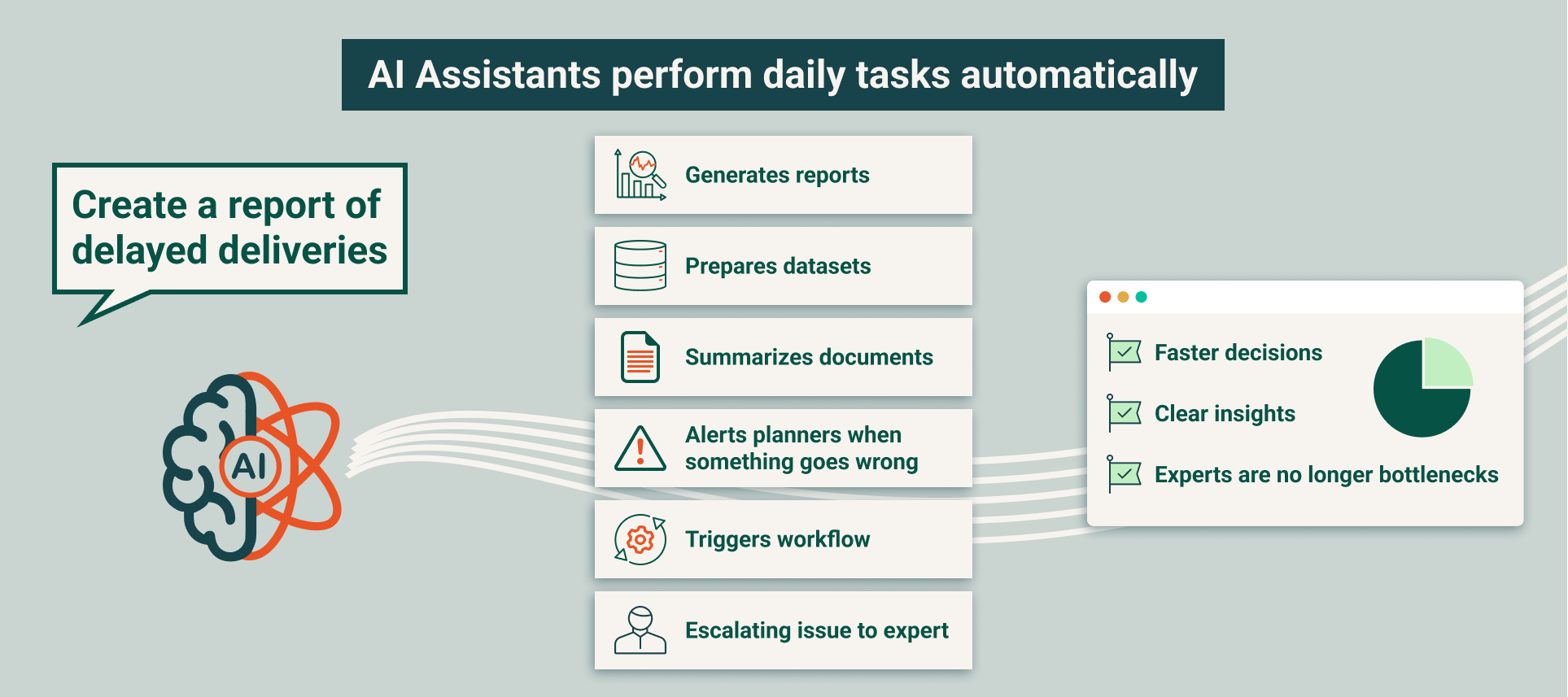
AI agents extend beyond answering questions and support execution of structured tasks. 

They can: 

  • Generate reports and summaries 
  • Prepare datasets 
  • Initiate workflows across connected systems 
  • Route exceptions to the right experts 

These actions follow predefined rules and validated knowledge sources, ensuring both control and scalability. 

Embedding intelligence into daily planning 

Assistants integrate directly into daily workflows. Planners can retrieve parameters, understand forecast changes, navigate policies, and investigate exceptions in real time. Executives can explore insights on demand without waiting for scheduled reports. 

Knowledge becomes consistently accessible and no longer depends on individual availability. 

From information access to proactive insight 

With a central intelligence layer monitoring data and activity, AI agents can also identify risks as they emerge. They detect anomalies, highlight threshold breaches, and surface policy changes. These alerts include context and suggested actions, helping users respond quickly and make more confident decisions. 

Measurable Impact 

  • Faster response times across planning and support processes 
  • Reduced manual workload through automated answers and task execution 
  • More consistent decision making based on governed knowledge 
  • Lower dependency on individual experts and tribal knowledge 

Want to learn more?

With 20 + years of experience and more than 1,000 successful projects, Optilon helps companies design supply chains that work – and keep improving.

Book a meeting with a supply chain expert to explore how Optilon’s AI-powered demand sensing solutions can help you respond faster to market signals, improve forecast accuracy, and keep inventory aligned with real demand. 

Stop planning monthly in a daily market

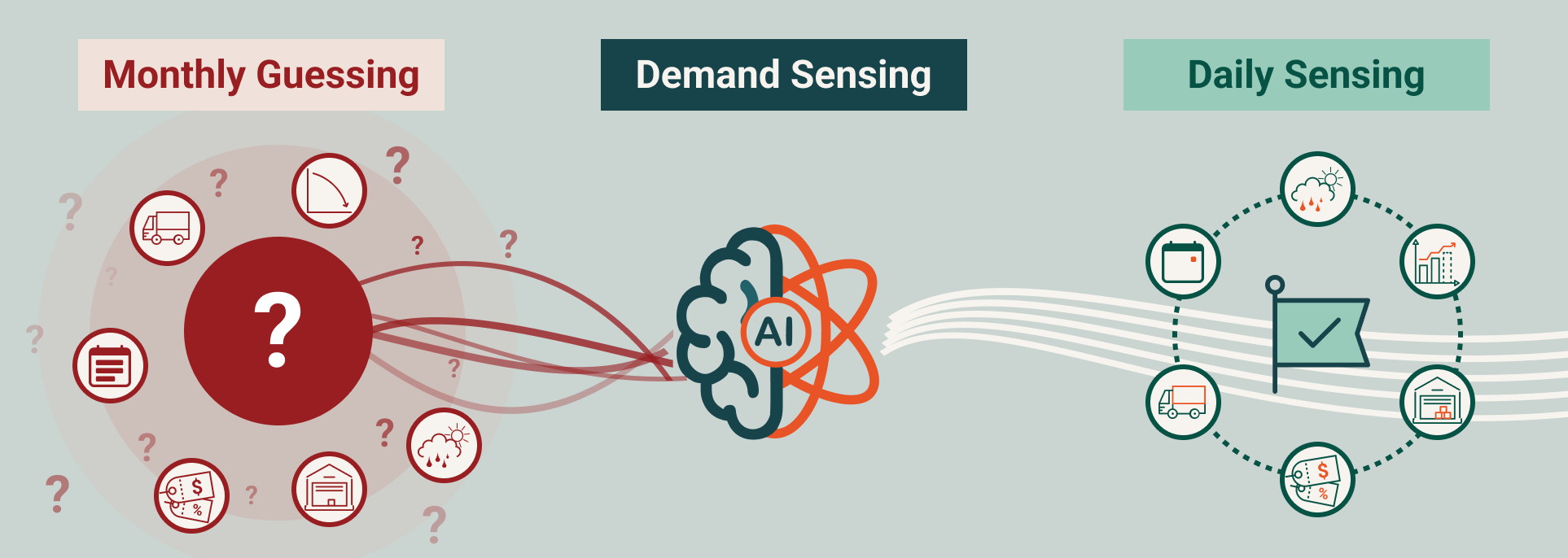
Most supply chains still plan in monthly cycles. The market moves daily.Point-of-sale data shifts. Promotions change demand patterns. 

Weather alters buying behavior, and pricing decisions trigger sudden volume swings. Without continuous sensing, planning becomes educated guessing. Small demand changes go unnoticed until they become shortages or excess inventory.  

Demand sensing addresses this gap by continuously analyzing downstream demand signals. Instead of reacting weeks later, companies can respond immediately. 

From reactive corrections to continuous control 

Traditional forecasting approaches rely on periodic updates. This creates latency between what is actually happening in the market and what the supply chain believes is happening. 

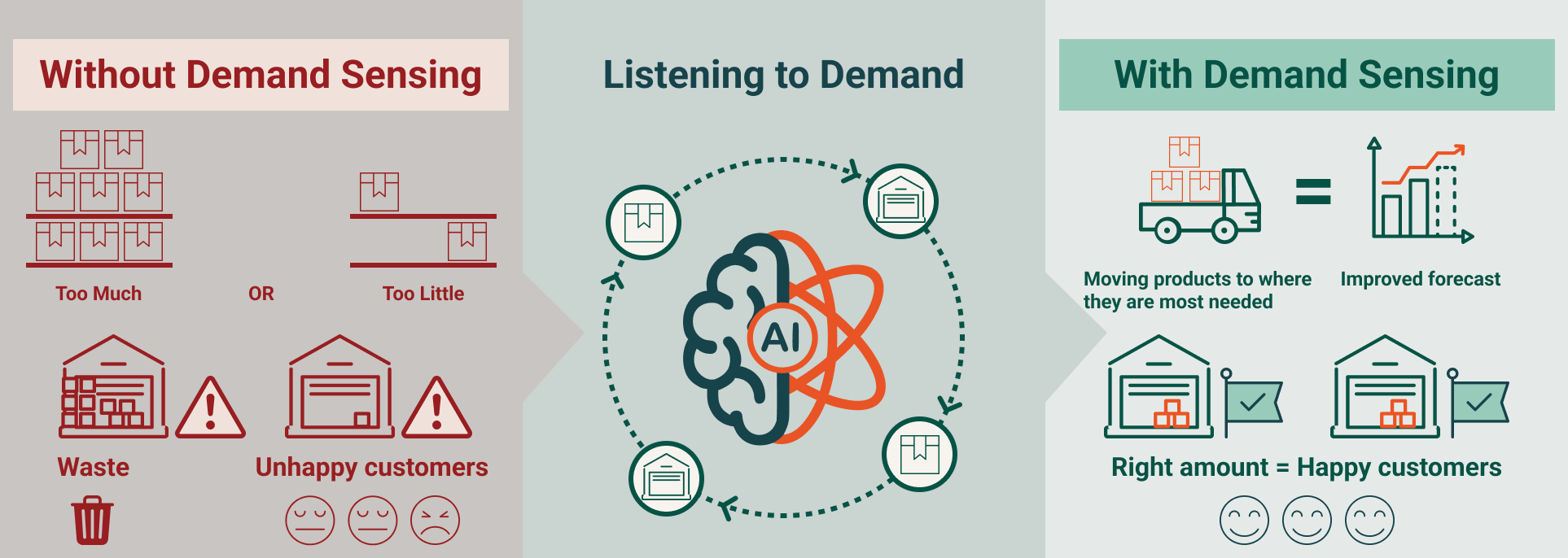
Without demand sensing: 

  • Inventory imbalances across locations  
  • Unexpected stockouts or overstocks  
  • Increasing waste and working capital pressure  
  • Firefighting planners and reactive decisions  


Turning demand signals into action 

With demand sensing in place, companies move from reactive corrections to proactive control. 

Demand signals are captured daily and analyzed using machine learning to identify meaningful deviations. The system evaluates the impact and recommends corrective actions.  

Key downstream signals typically include: 

  • Point-of-sale transactions 
  • Promotions and marketing activities 
  • Price changes 
  • Weather patterns 
  • Seasonal and local demand drivers 

This is not just a forecast update. It is continuous demand control that keeps planning aligned with real market behavior. 

Improving both forecast accuracy and inventory decisions 

Improved forecasting is only part of the value. Demand sensing also improves inventory decisions across the network.  

As signals change, inventory can be dynamically rebalanced. If demand accelerates in one region while softening in another, the system recommends redeployment actions to protect service where it is at risk and reduce excess where it is building.  

By reducing the gap between shelf reality and planning assumptions, organizations gain valuable time to adjust production, deployment, and transportation decisions — before small deviations become costly disruptions.  


Measurable performance gains — without adding work 

Demand sensing delivers results that matter to both planners and executives: 

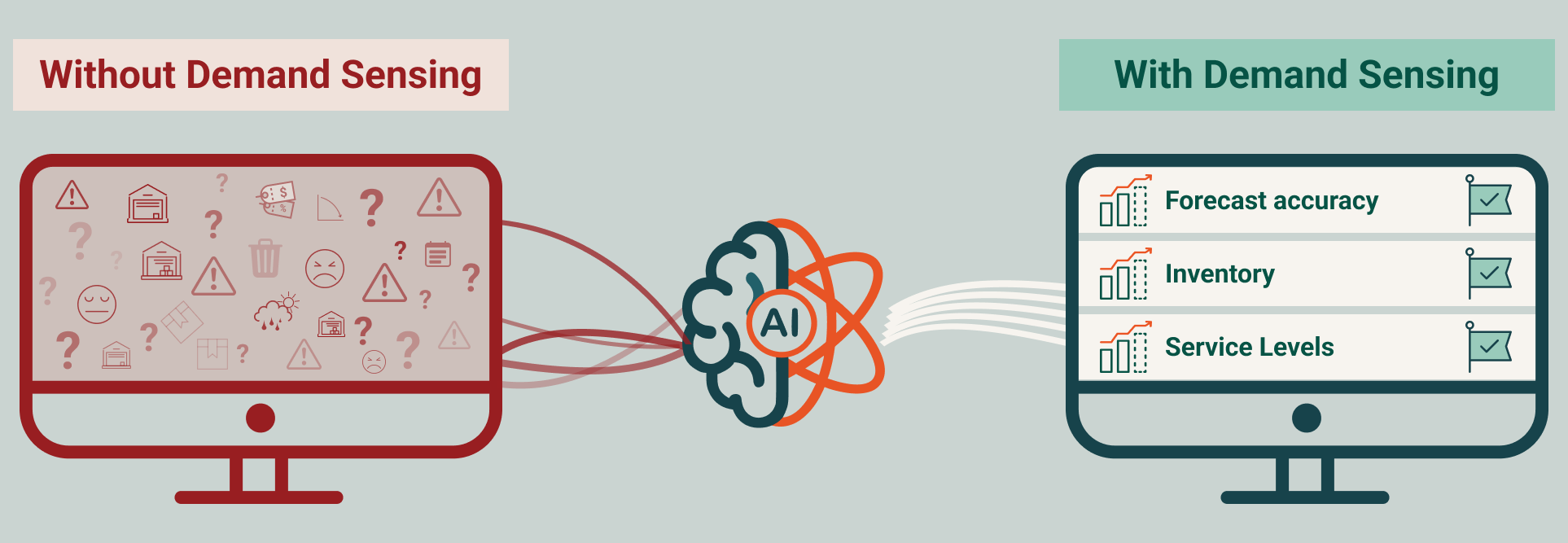
  • 15–40% improvement in short-term forecast accuracy 
  • 10–30% reduction in inventory 
  • 2–5 percentage-point service-level increase 

The system continuously ingests fresh demand data, detects what matters, and escalates only what requires attention. Planners work by exception, focusing on the few items or locations that truly matter. 

No spreadsheet overload.No manual re-forecasting cycles. 

Just clearer decisions. 

A core capability of the AI-first control layer 

Demand sensing delivers the greatest value when implemented as part of a broader decision architecture. 

When combined with probabilistic planning and multi-echelon optimization: 

  • Near-term signals become more accurate  
  • Structural buffers across the network are optimized  
  • Service improves 
  • Working capital decreases 

This shift represents a move from static planning cycles toward continuous decision orchestration where supply chains operate with greater speed and precision. 

Want to learn more?

With 20 + years of experience and more than 1,000 successful projects, Optilon helps companies design supply chains that work – and keep improving.

Book a meeting with a supply chain expert to explore how Optilon’s AI-powered demand sensing solutions can help you respond faster to market signals, improve forecast accuracy, and keep inventory aligned with real demand. 

Supply chain design is often slow. Analysts spend weeks preparing data and building models. Decisions then move between spreadsheets and email threads.

Natural language modeling changes this. Teams can describe what they need and the system builds it.  

Build models faster with less effort 

Teams can create network scenarios in hours instead of weeks simply by asking the system to build them. Automated workflows prepare data, configure models, and generate scenarios with minimal intervention.

The system automates data preparation and pipeline creation. It standardizes workflows and provides ready baseline models. API-connected inputs ensure consistency across scenarios. 

KPIs influenced: 

  • 70 to 90 percent reduction in data preparation time 
  • 2 to 5 times faster scenario turnaround  

Shared workspaces that reduce friction 

Collaboration improves when teams work in shared, governed workspaces with clear ownership and version control. This eliminates scattered files and reduces rework.  

Teams gain centralized visibility of models and data, with clear ownership and permissions. Decisions are fully traceable, and review processes become more structured. 

KPIs influenced: 

  • 25 to 40 percent reduction in time spent aligning assumptions across teams 
  • Improved decision quality, supported by consistent model lineage and governance 

Scenario exploration at scale 

Once models exist, teams can run new scenarios with natural language and compare outcomes in intuitive dashboards. Cloud solving makes it easy to explore more alternatives. 

Teams can run product-level scenarios across multiple timeframes, solve them in parallel, and compare alternatives more clearly. 

KPIs influenced: 

  • More scenarios per planning cycle, supporting better decision coverage 
  • Shorter time to executive-ready insight thanks to clean dashboards 

A shift to coordinated decision making 

With natural language modeling and orchestration, organizations move from fragmented, specialist-heavy workflows to a coordinated decision environment. AI handles complex modeling so teams can focus on evaluating and aligning decisions. 

Outcome KPI: 

  • Higher adoption across nontechnical teams because the interface becomes accessible and guided by natural language 

Want to learn more?

With 20 + years of experience and more than 1,000 successful projects, Optilon helps companies design supply chains that work – and keep improving.

Book a meeting with a supply chain expert to explore how Optilon’s natural language modeling and decision orchestration solutions can help your teams design, evaluate, and align on network decisions faster and with greater transparency. 

From reactive operations to proactive resilience 

Supply chains face constant shifts in demand and cost. 
Many companies still rely on disconnected tools and limited visibility. 

AI-driven optimization brings planning together. It helps organizations move from reactive firefighting to proactive decisions.

A supply chain digital twin for one unified view 

Data often sits in separate systems, making it hard to get a consistent view. Our Supply Chain Digital Twin creates a single source of truth across demand, supply, inventory, capacity, and transportation data, improving consistency and speeding up scenario analysis. 

This creates harmonized planning assumptions, faster and more reliable scenario cycles, and clearer trade-offs between cost and service. 

KPIs influenced: 

  • 15 to 30 percent faster scenario cycle times through unified modeling 
  • Fewer alignment loops across planning teams 

Smarter forecasting and optimization 

AI selects the best forecast model for each product and region. Optimization evaluates trade-offs between cost, service, risk, and sustainability across network and inventory strategies.  

The system selects the best forecast model for each product and region, supports multi-echelon and network optimization, and enables routing across road, rail, air, and ocean. 

KPIs influenced: 

  • Improved forecast reliability, enabling better upstream and downstream planning 
  • Lower total cost through optimized routing and inventory 
  • Higher service levels from scenario-verified strategies 

High performance solving 

GPU-accelerated optimization makes it possible to run larger and more complex models faster. Giving organizations the ability to explore more alternatives.  

KPIs influenced: 

  • Order-of-magnitude speed increases in large scale optimization (aligned with GPU acceleration referenced) 
  • More scenarios per cycle, improving strategic resilience 

Interfaces built for business users 

Planners can simulate changes and immediately see the impact on service, cost, lead time, and emissions. This reduces dependency on technical experts and speeds internal alignment.  

KPIs influenced: 

  • Shorter decision lead times, because teams can self-serve 
  • Faster cross-functional alignment around scenario outcomes 

Enterprise decision readiness 

Human-in-the-loop workflows let teams test logic, run scenarios, and deploy decisions without IT. This strengthens cross-functional collaboration and supports continuous planning.  

KPIs influenced: 

  • Reduced IT dependency, speeding execution 
  • Higher deployment success, since decisions are validated collaboratively 

Want to learn more?

With 20+ years of experience and more than 1,000 successful projects, Optilon helps companies design supply chains that work – and keep improving.

Book a meeting with us to contact us to explore how Optilon’s AI-driven optimization solutions can support your planning and decision-making. 

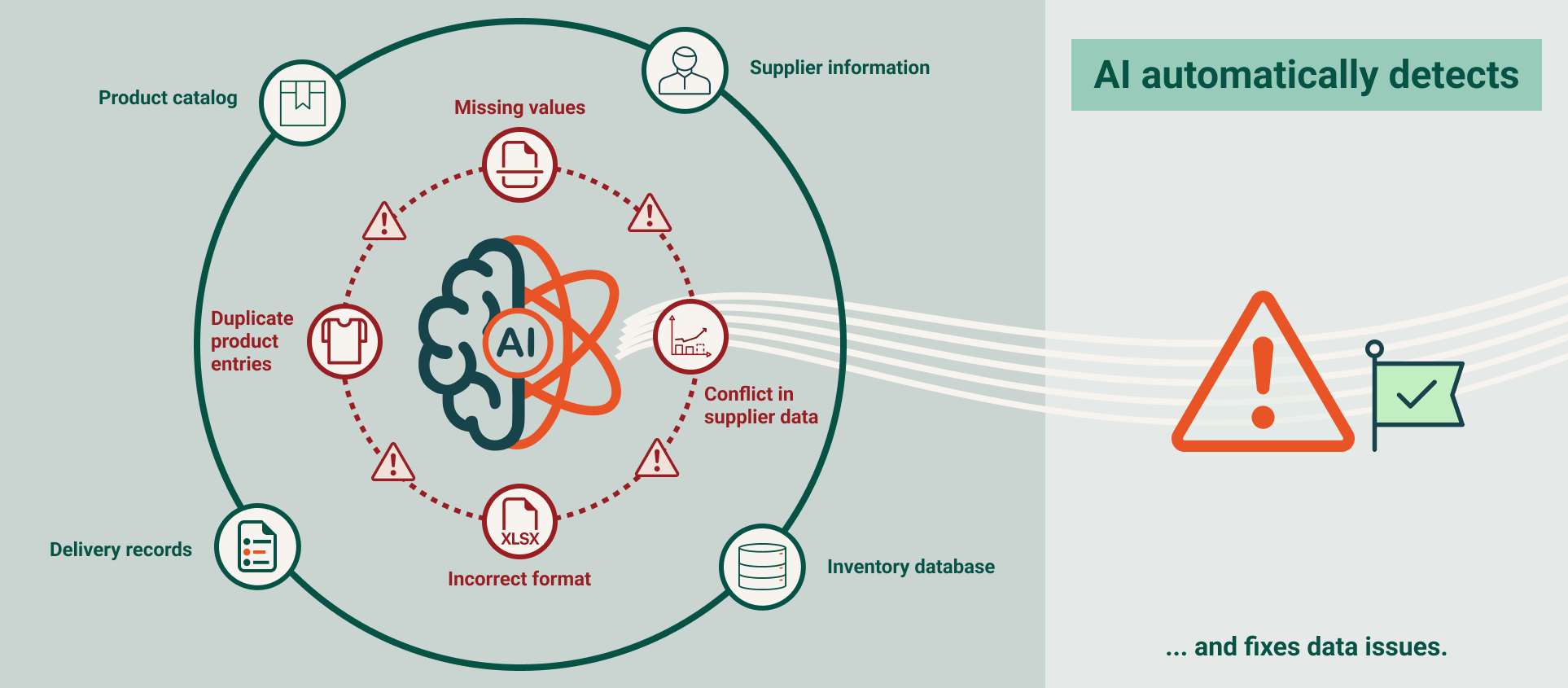
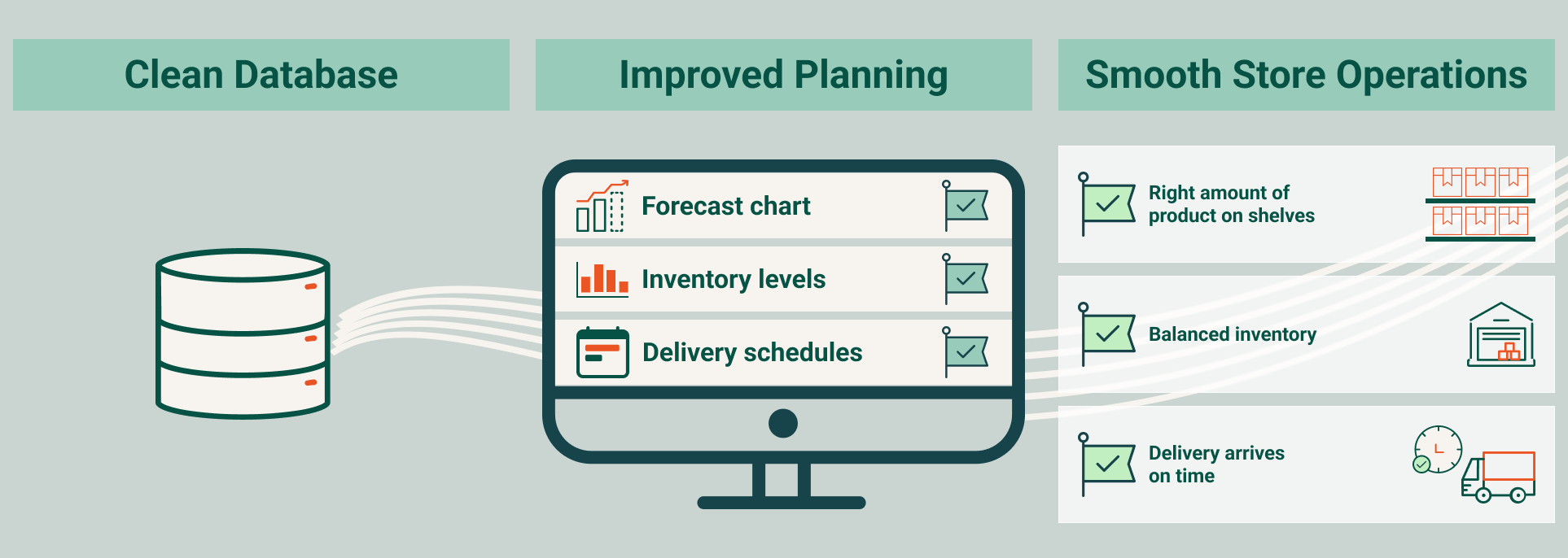
How can AI help supply chain professionals understand their data faster?

Generative AI is becoming an important capability in modern supply chain planning. When connected to the right data and workflows, it can help planners turn insights into actions faster.

In this on-demand webinar, Victor Bengtsson demonstrates practical use cases of Generative AI in supply chain planning — including how AI can analyze complex datasets, identify delays and root causes, and automate reporting and communication.

This webinar is part of the Optilon Supply Chain Conference and includes a realistic demo case, giving you concrete examples of how AI can support your planning processes today.

What you will learn 

  • How to interpret large supply chain datasets more efficiently 
  • How to detect delays and identify root causes faster 
  • How to automate recurring reports and performance summaries 
  • How AI can support planner communication and daily workflows 
  • How Generative AI fits into the broader supply chain AI landscape 

Who should watch 

Relevant for professionals working with: 

  • Supply chain planning 
  • Demand and supply planning 
  • S&OP 
  • Logistics and operations 
  • Supply chain development and digitalization 

It is especially useful for teams that want to explore how Generative AI in supply chain can improve day-to-day planning work, communication, and decision making. 

You can find our other upcoming events here!

Contact us to book a meeting

By clicking “Submit”, I agree to Optilons privacy policy.

Get access to the webinar recording