


Planning teams face a constant stream of questions. Operational processes, system data, planning policies, and analytics all generate continuous demand for answers.
The information exists, but it is scattered across inboxes, systems, and individual experts. As expectations for speed and accuracy increase, traditional support models cannot keep up.
Decision making slows down, manual work increases, and planners rely on information that may be incomplete or outdated.
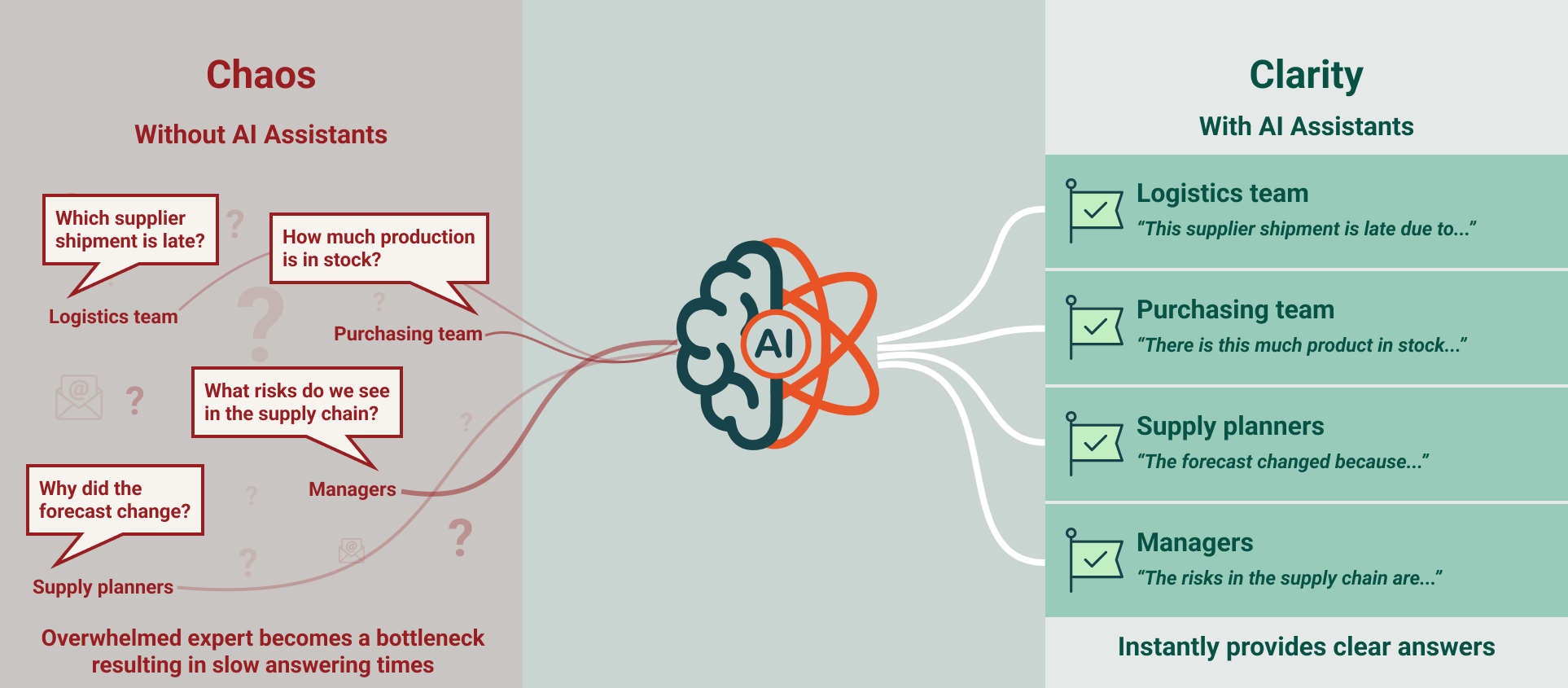
From manual support to instant, governed answers
AI assistants change how knowledge is accessed. Instead of routing questions through emails or relying on specific individuals, users interact directly with an intelligent assistant. Questions are understood in natural language, relevant information is retrieved across systems, and responses are delivered instantly.
This creates a consistent and governed way of accessing knowledge, reducing dependency on individuals while improving speed and accuracy.
How AI assistants deliver reliable answers
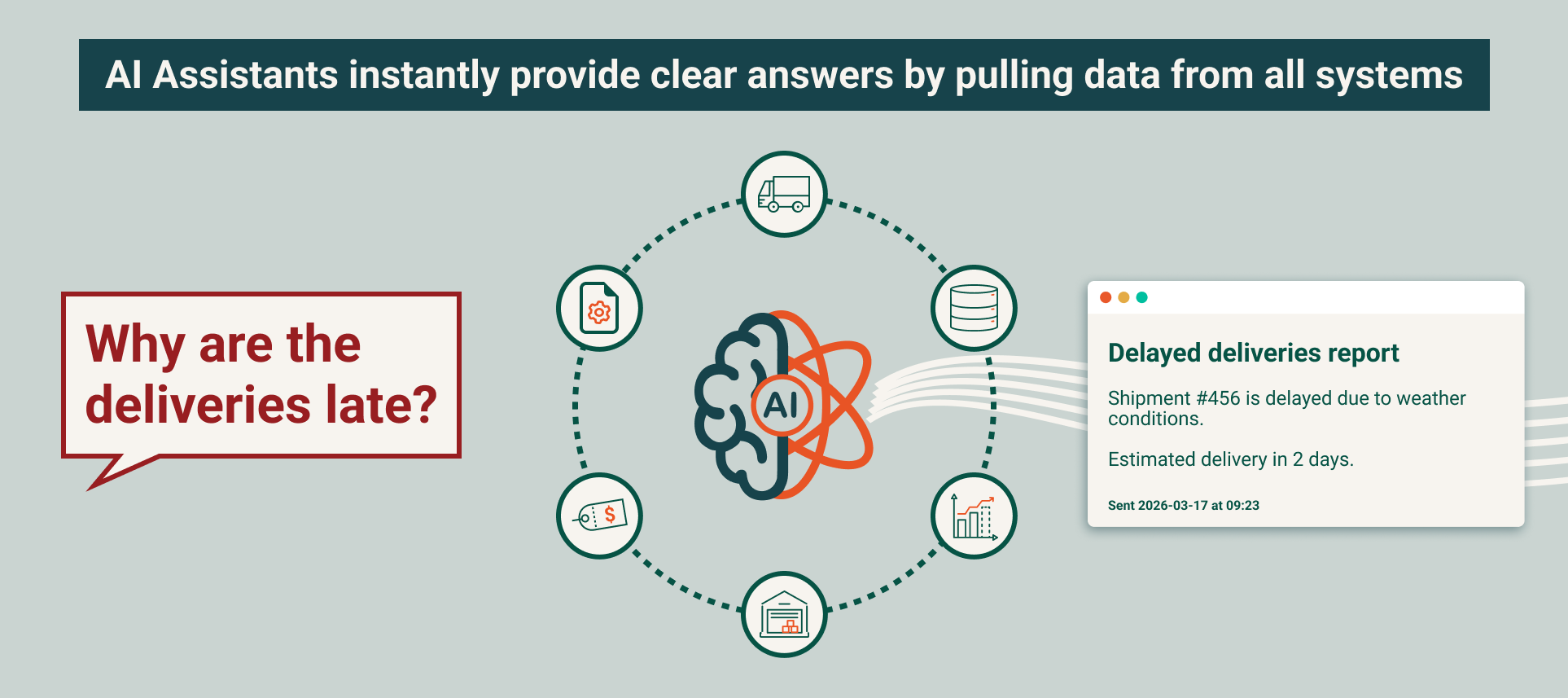
AI assistants combine language models, retrieval technologies, and workflow automation to create a unified interaction layer across systems.
They interpret user intent and connect it to the right data, whether the question relates to planning policies, product data, logistics status, pricing rules, or process guidelines. Responses are grounded in governed knowledge sources, ensuring consistency across teams.
Context is maintained throughout the interaction, allowing follow-up questions to build naturally without restarting the process.
From answers to action
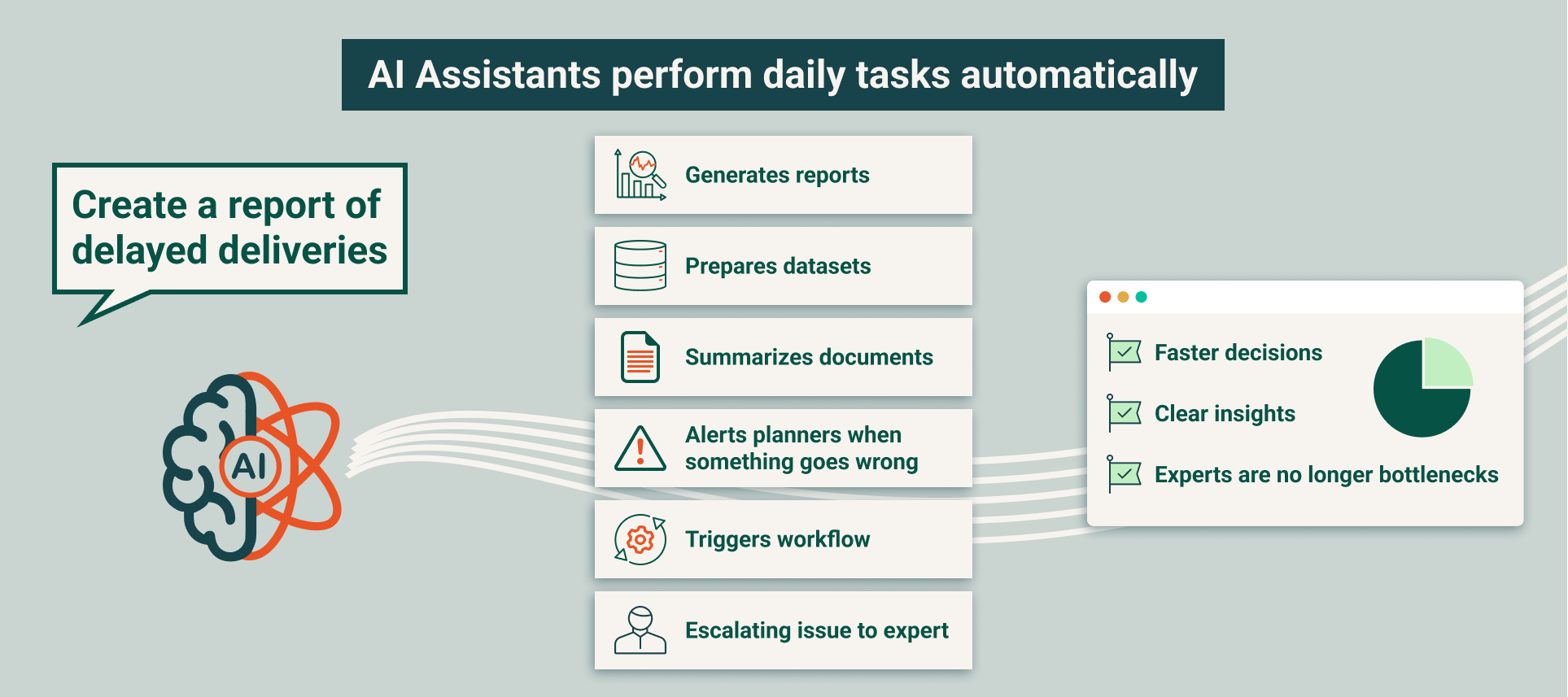
AI agents extend beyond answering questions and support execution of structured tasks.
They can:
- Generate reports and summaries
- Prepare datasets
- Initiate workflows across connected systems
- Route exceptions to the right experts
These actions follow predefined rules and validated knowledge sources, ensuring both control and scalability.
Embedding intelligence into daily planning
Assistants integrate directly into daily workflows. Planners can retrieve parameters, understand forecast changes, navigate policies, and investigate exceptions in real time. Executives can explore insights on demand without waiting for scheduled reports.
Knowledge becomes consistently accessible and no longer depends on individual availability.
From information access to proactive insight
With a central intelligence layer monitoring data and activity, AI agents can also identify risks as they emerge. They detect anomalies, highlight threshold breaches, and surface policy changes. These alerts include context and suggested actions, helping users respond quickly and make more confident decisions.
Measurable Impact
- Faster response times across planning and support processes
- Reduced manual workload through automated answers and task execution
- More consistent decision making based on governed knowledge
- Lower dependency on individual experts and tribal knowledge
Want to learn more?
With 20 + years of experience and more than 1,000 successful projects, Optilon helps companies design supply chains that work – and keep improving.
Book a meeting with a supply chain expert to explore how Optilon’s AI-powered demand sensing solutions can help you respond faster to market signals, improve forecast accuracy, and keep inventory aligned with real demand.