


Supply chain design is often slow. Analysts spend weeks preparing data and building models. Decisions then move between spreadsheets and email threads.
Natural language modeling changes this. Teams can describe what they need and the system builds it.
Build models faster with less effort
Teams can create network scenarios in hours instead of weeks simply by asking the system to build them. Automated workflows prepare data, configure models, and generate scenarios with minimal intervention.
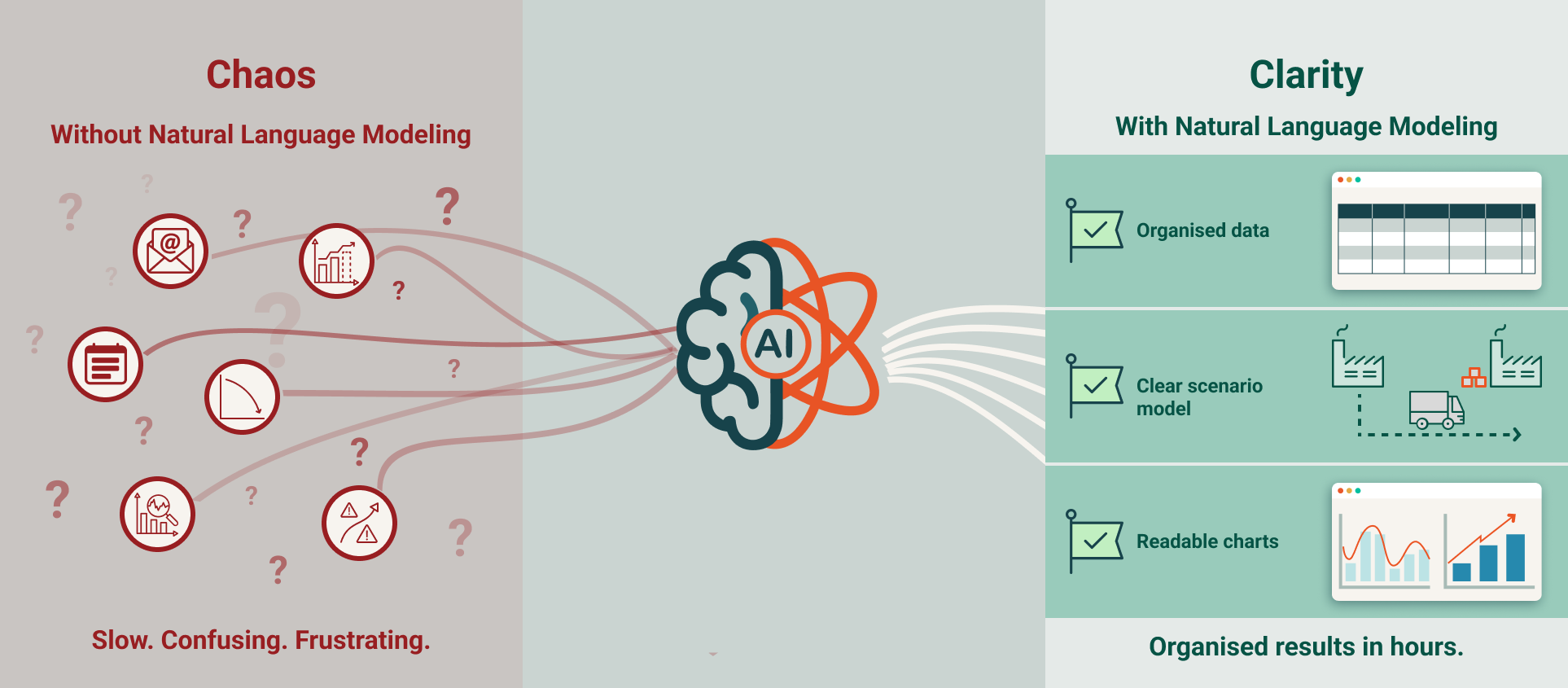
The system automates data preparation and pipeline creation. It standardizes workflows and provides ready baseline models. API-connected inputs ensure consistency across scenarios.
KPIs influenced:
- 70 to 90 percent reduction in data preparation time
- 2 to 5 times faster scenario turnaround
Shared workspaces that reduce friction
Collaboration improves when teams work in shared, governed workspaces with clear ownership and version control. This eliminates scattered files and reduces rework.
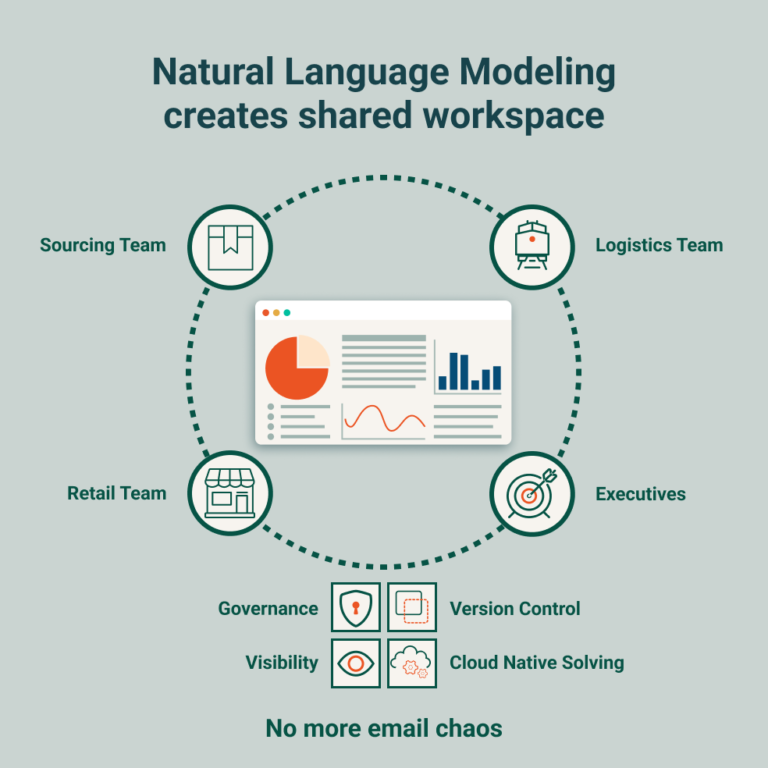
Teams gain centralized visibility of models and data, with clear ownership and permissions. Decisions are fully traceable, and review processes become more structured.
KPIs influenced:
- 25 to 40 percent reduction in time spent aligning assumptions across teams
- Improved decision quality, supported by consistent model lineage and governance
Scenario exploration at scale
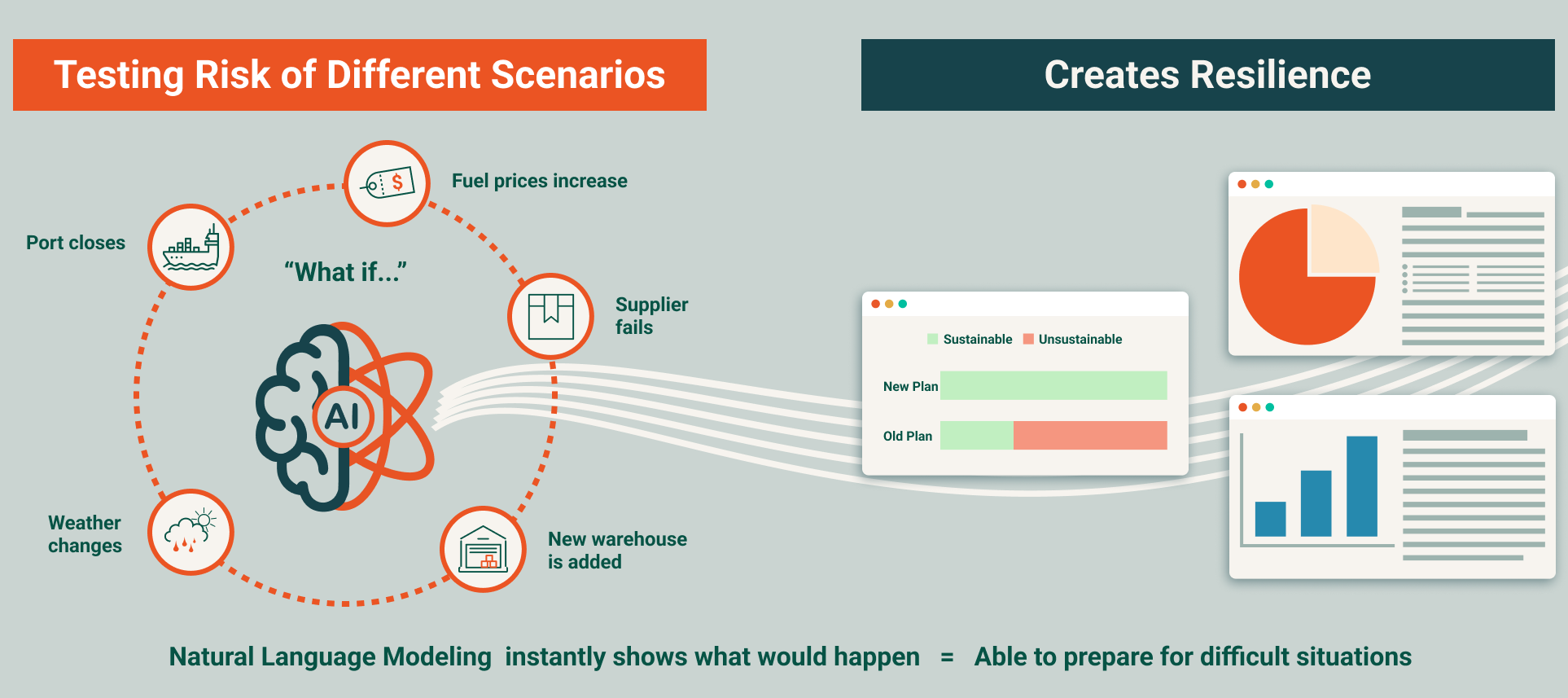
Once models exist, teams can run new scenarios with natural language and compare outcomes in intuitive dashboards. Cloud solving makes it easy to explore more alternatives.
Teams can run product-level scenarios across multiple timeframes, solve them in parallel, and compare alternatives more clearly.
KPIs influenced:
- More scenarios per planning cycle, supporting better decision coverage
- Shorter time to executive-ready insight thanks to clean dashboards
A shift to coordinated decision making
With natural language modeling and orchestration, organizations move from fragmented, specialist-heavy workflows to a coordinated decision environment. AI handles complex modeling so teams can focus on evaluating and aligning decisions.
Outcome KPI:
- Higher adoption across nontechnical teams because the interface becomes accessible and guided by natural language
Want to learn more?
With 20 + years of experience and more than 1,000 successful projects, Optilon helps companies design supply chains that work – and keep improving.
Book a meeting with a supply chain expert to explore how Optilon’s natural language modeling and decision orchestration solutions can help your teams design, evaluate, and align on network decisions faster and with greater transparency.