


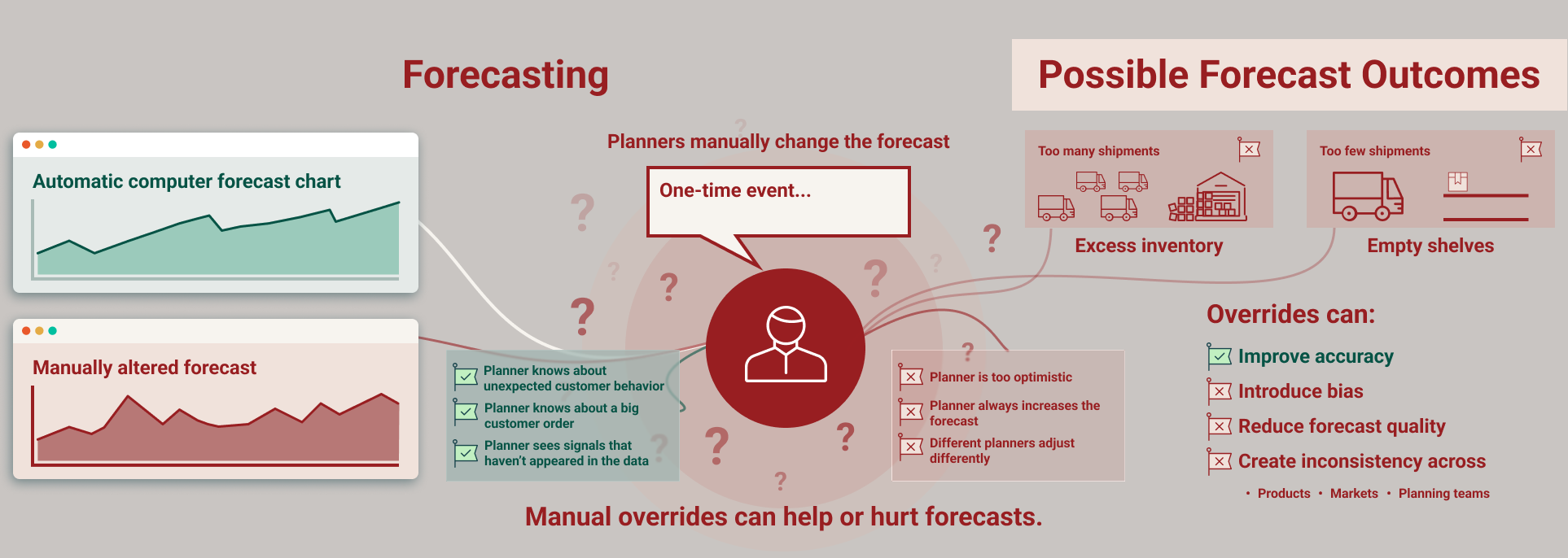
Manual forecast overrides play an important role in demand planning. Planners often have access to information that statistical models cannot yet reflect, such as customer behavior changes, one‑off events, or early market signals. When applied well, overrides add valuable context and improve forecast quality.
The challenge is knowing when overrides truly add value — and when they quietly reduce accuracy.
Why manual overrides are difficult to manage
In many organizations, override decisions are made under time pressure and based on individual judgment. Once applied, they are rarely evaluated in a structured way.
Over time, this creates several issues:
- Overrides accumulate without clear ownership or rationale
- Similar situations are handled differently across teams and regions
- Planners repeat adjustments without knowing if they helped last time
Without visibility into outcomes, planning behavior becomes inconsistent and harder to govern.
From subjective intuition to evidence‑based evaluation
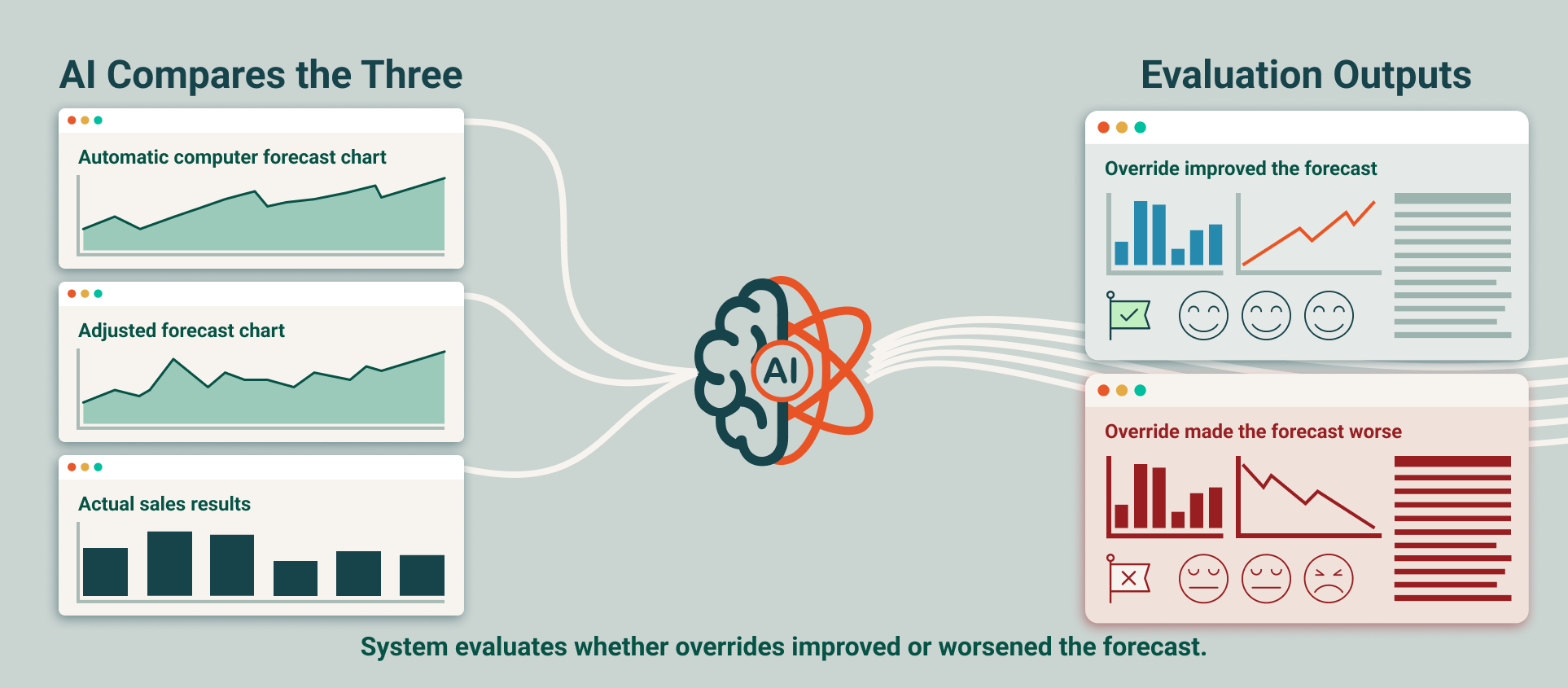
AI‑driven forecast override assessment introduces an objective way to evaluate manual adjustments. The system compares the original statistical forecast, the overridden forecast, and the actual demand outcome to determine whether the adjustment improved or weakened accuracy.
By learning from historical override patterns, the system helps teams understand when manual intervention tends to work and when it does not.
How override assessment supports better planning
- Evaluates the true impact of each override instead of relying on opinion
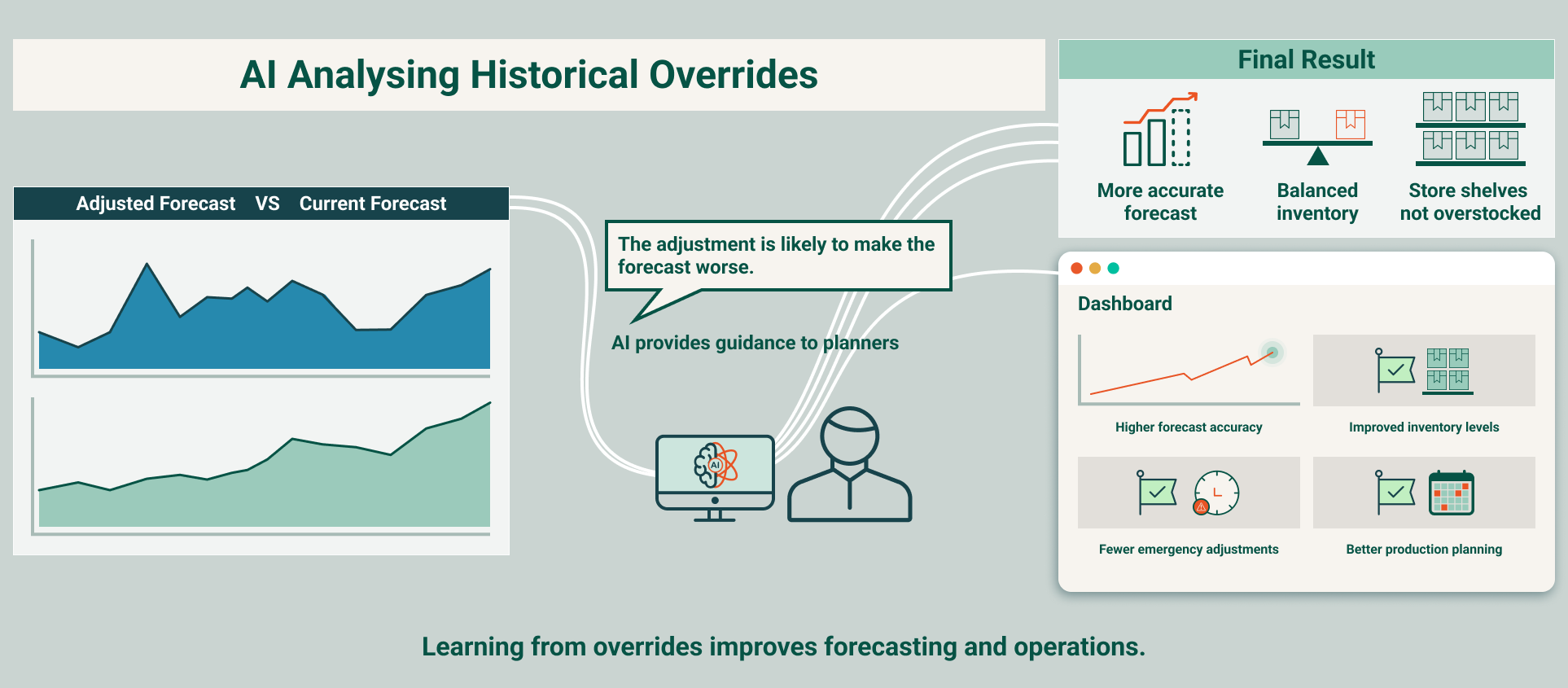
- Explains why an override helped or harmed accuracy using historical context
- Provides guidance during forecast reviews, not only after results are known
This shifts override decisions from habit and intuition toward learning and consistency.
Embedding transparency into forecast reviews
Override insights integrate directly into existing forecast review routines.
Planners receive context when considering changes, helping them decide whether an adjustment is justified. Teams gain a shared language for discussing overrides, reducing debates based on personal preference.
Leaders gain visibility into override behavior across categories, regions, and time horizons, making it easier to support targeted coaching and governance instead of blanket rules.
Over time, forecasting evolves from a manual adjustment process into a continuously improving discipline.
Measurable impact
- Higher and more consistent forecast accuracy
- Reduced bias in manual override behavior
- Improved inventory and service performance
- Clearer accountability and transparency across planning teams
Want to learn more?
With 20 + years of experience and more than 1,000 successful projects, Optilon helps companies design supply chains that work and keep improving.
Book a meeting with a supply chain expert to explore how predictive demand sensing can improve forecast accuracy, reduce demand uncertainty, and strengthen customer insights.