


Production rarely unfolds exactly as planned. Machines fail, materials arrive late, quality issues emerge, and staff availability shifts. These disruptions create gaps between planned and actual output.
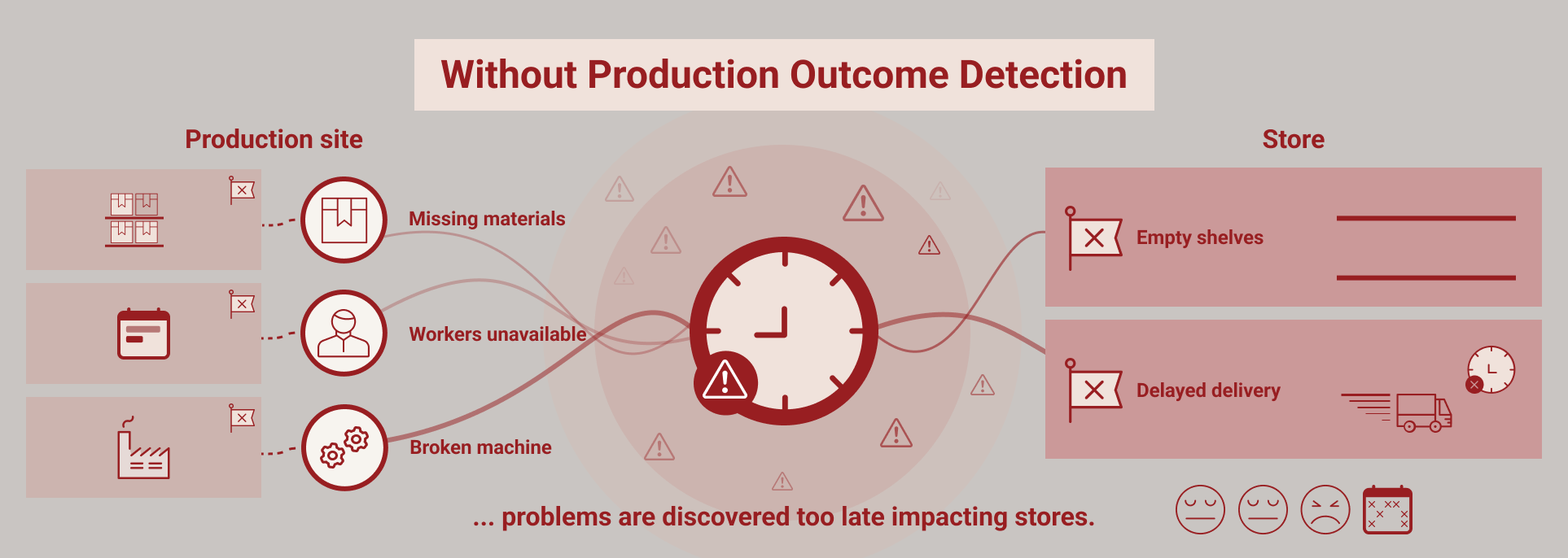
In many organizations, these issues are only identified once they are already affecting production. At that point, planning teams have limited options and are forced into reactive adjustments.
The cost of reacting too late
Without early visibility, small deviations quickly escalate into operational inefficiencies. Rescheduling becomes urgent, overtime increases, and unnecessary changeovers occur. Capacity is either underutilized or overstretched, while delivery precision declines and costs rise.
Over time, confidence in planning decreases, and teams rely more on manual intervention to maintain control.
From reactive response to predictive control
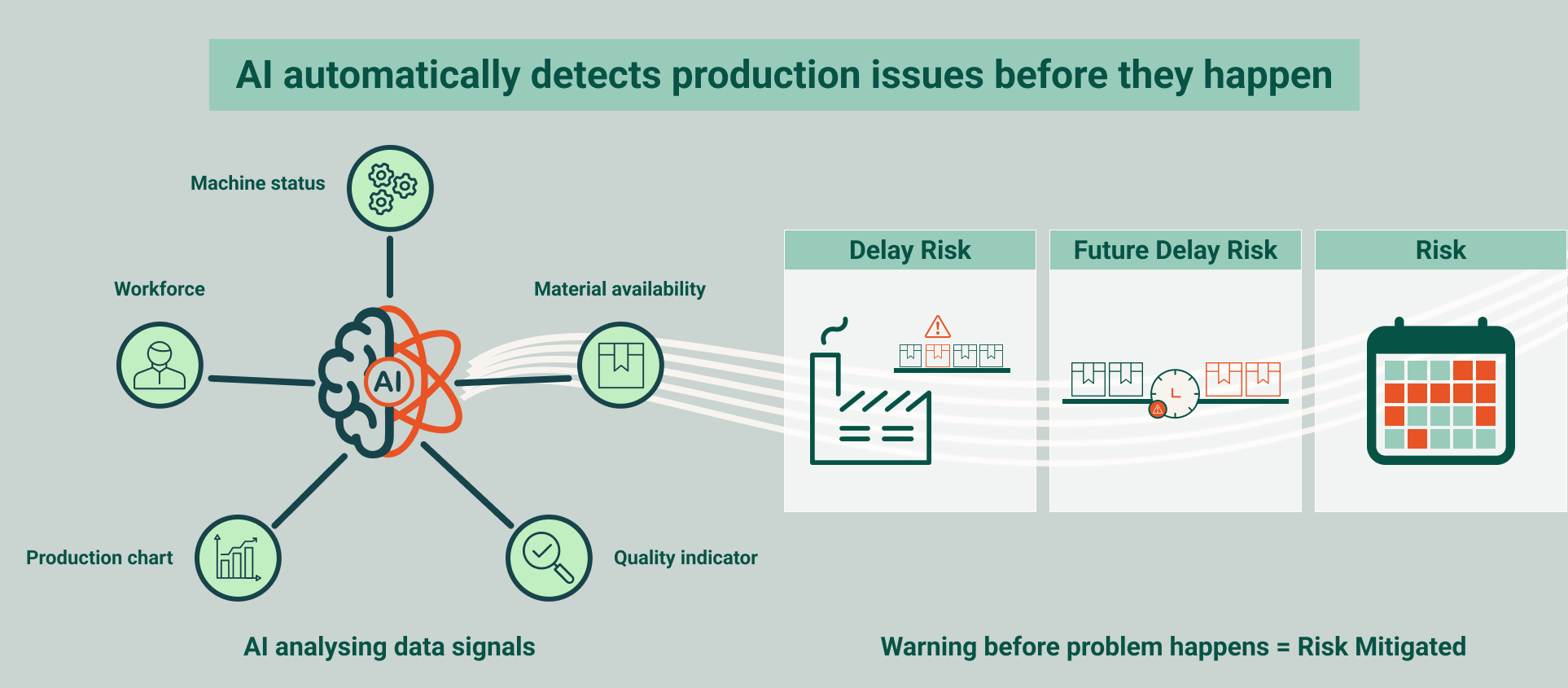
Production outcome detection introduces a predictive layer that identifies where deviations are likely to occur before they impact output.
By combining historical performance with real-time signals, the system highlights risks early. This allows teams to adjust schedules, reallocate resources, and protect priority orders in a controlled way. Instead of reacting to disruptions, organizations gain the ability to anticipate and manage them.
What signals reveal emerging risks
The system evaluates a wide range of production data to detect early signs of instability.
Key signals include:
- Cycle times, throughput patterns, and scrap rates that indicate performance shifts
- Sensor readings and energy profiles that highlight emerging equipment risks
- Material availability and delivery signals that reveal potential constraints
- External factors such as upstream disruptions and workforce limitations
By combining these inputs, the system estimates both the likelihood and potential impact of future deviations.
Turning predictions into operational decisions
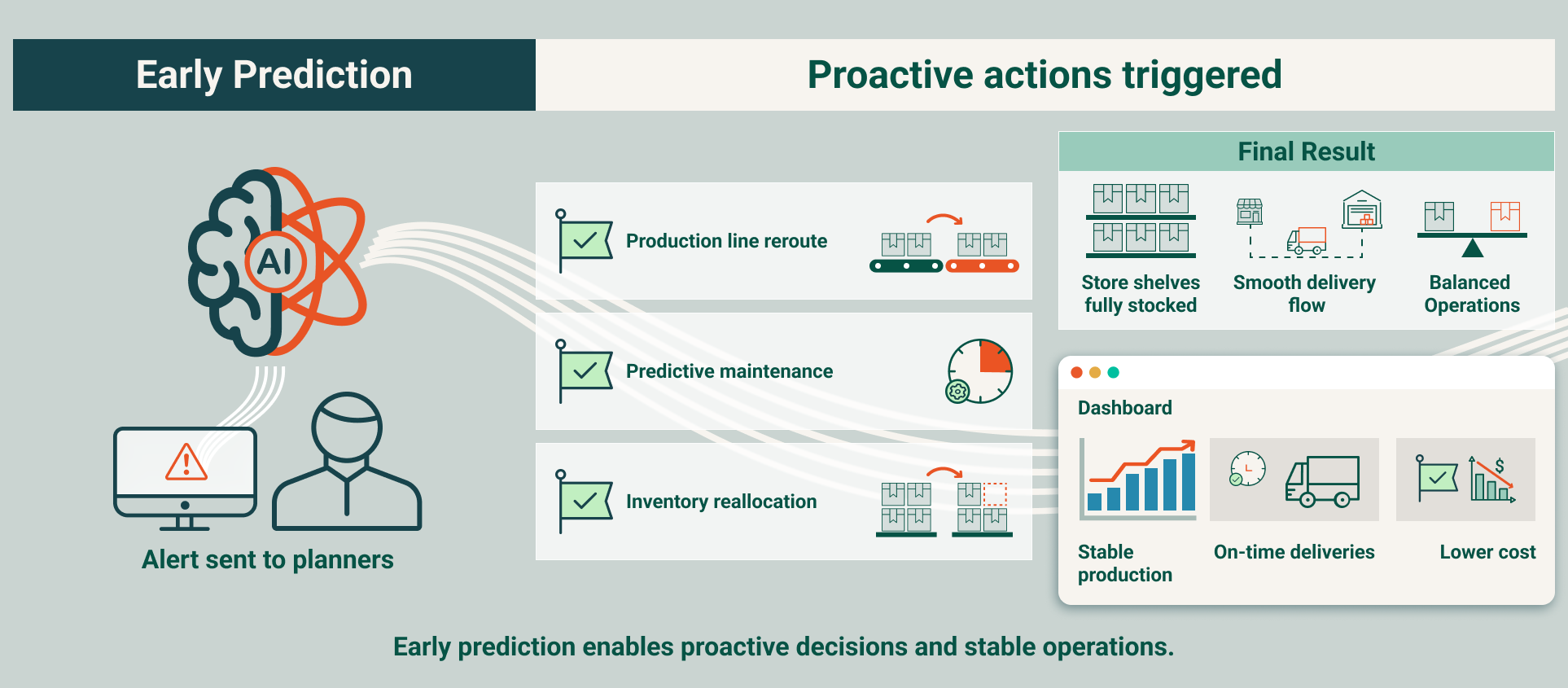
Predictive insights are embedded directly into planning and execution processes. Planners can adjust schedules earlier, supervisors gain visibility into where action is needed, and maintenance teams can prioritize high-risk equipment. Leaders gain a clearer view of expected production stability before planning cycles begin.
This improves alignment between planning and operations and reduces the need for last-minute interventions.
Strengthening cross-functional coordination
Earlier visibility into production risks improves coordination across functions. Procurement can prepare for material changes, logistics can adjust outbound expectations, and customer-facing teams can communicate more accurately. Scenario planning also becomes more realistic by incorporating predicted variability instead of relying only on historical assumptions.
Measurable Impact
- Earlier identification of production risks before they impact output
- Improved delivery performance through timely schedule adjustments
- Reduced downtime and scrap by addressing issues early
- Lower operational costs by reducing emergency actions and expedites
Want to learn more?
With 20 + years of experience and more than 1,000 successful projects, Optilon helps companies design supply chains that work and keep improving.
Book a meeting with a supply chain expert to explore how AI-driven production outcome detection can help you stabilize operations, protect customer commitments, and optimize resource use across your production network.